

Terraces, Semis And Timber Floors
Leaking Shower Repairs Inner West
Almost nothing here is built on a slab, and that changes the whole diagnosis.
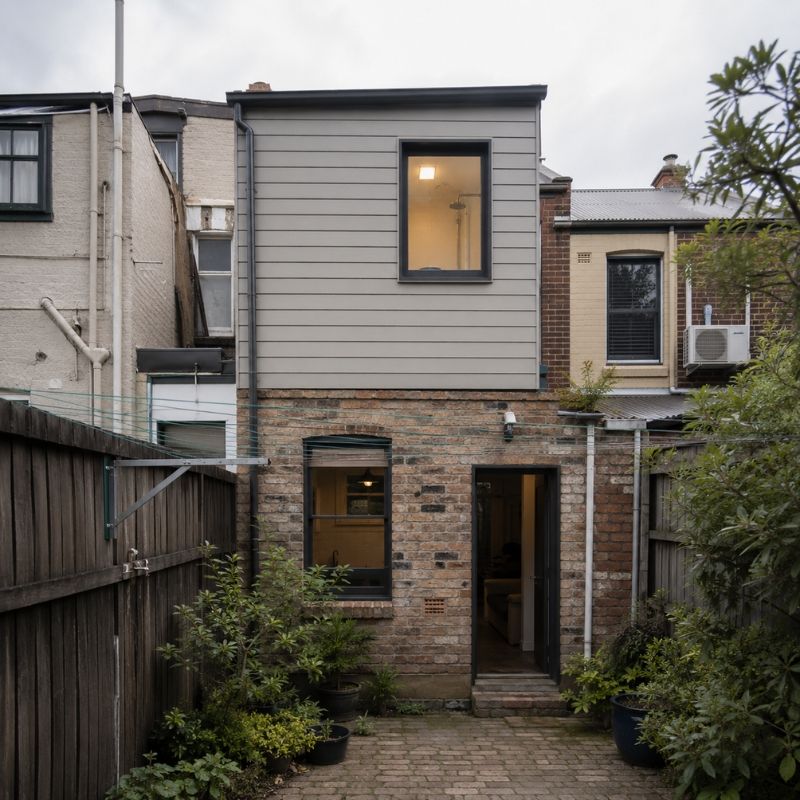
Newtown, Enmore, Annandale, Balmain and Petersham are Victorian and Federation terraces and semis, most with the bathroom retrofitted into a rear addition or squeezed upstairs above a living room. The floors are timber. So when a shower gets past the bed, water does not spread sideways the way it does on concrete, it goes straight down into the joists.
Get a repair quote
Joists, bearers and rear additions
Why a terrace leak behaves differently
On a concrete slab, water that escapes a shower runs along the topping and surfaces somewhere flat. In a terrace it drops. It reaches the joists, soaks along the grain, and shows up in the ceiling below, which is frequently a living room rather than a spare bedroom nobody uses.
The other complication is where these bathrooms are. Very few terraces were built with one. They were added later, often into a rear skillion or upstairs into what used to be a bedroom, and a good number of those additions went in before waterproofing membranes were standard. Screed on sheeting, tiles on top, and forty years of optimism.
It is not all bad news. Timber floors usually mean subfloor access, and subfloor access means we can see what is happening rather than inferring it. That is a genuine advantage over a slab, and we use it.
What we check in a terrace or semi

Old houses, current methods
What we handle in the Inner West
Seven services, each linking to its own page. All of them adapted for buildings that were finished before any of this was regulated.
Water Leak Detection Inner West
Old houses hold damp for reasons that have nothing to do with the shower, so proving it is the shower comes first. Plugged flood test, moisture readings taken with the bathroom unused for two days, and subfloor inspection where there is access, because in a terrace there usually is.
Waterproofing Inner West
Bathrooms retrofitted into terraces are the ones that catch people out. Many were built over timber floors with a screed bed and no membrane, sometimes above a living room. We strip back, sheet properly, reset the fall, seal the junctions and the waste, then lay a new membrane.
Tile Grouting Inner West
Small mosaic and hexagon floors are everywhere in Inner West bathrooms, and they have a lot of joint for their area. That means more places to fail and more work to rake out properly. We do it to depth rather than skimming, then refill with a flexible grout.
Conservation areas and what they actually restrict
Working on a heritage listed street
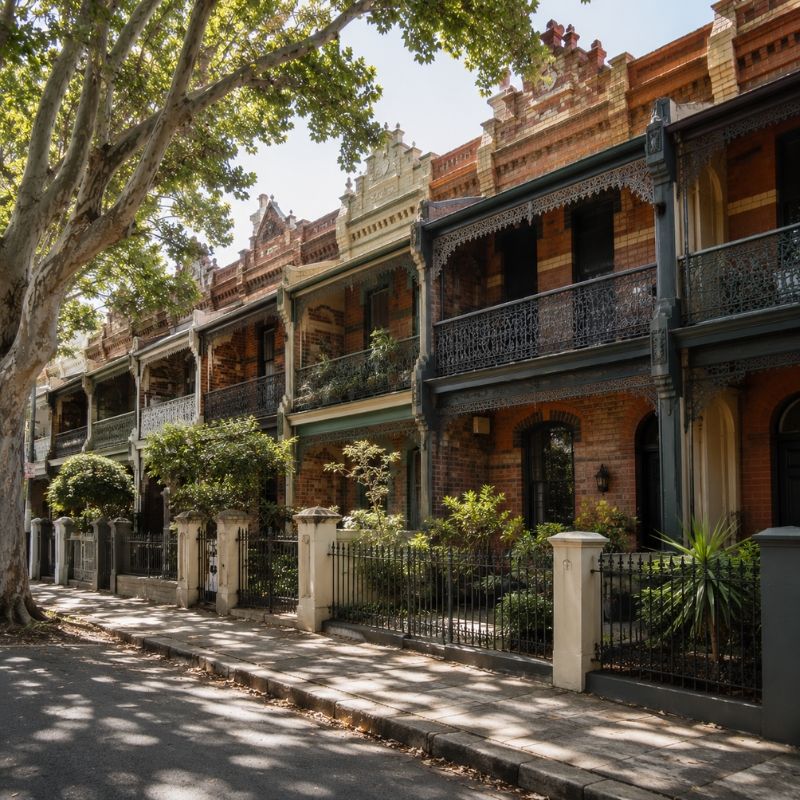
A lot of the Inner West sits inside conservation areas, and owners often assume that means they cannot touch anything. In practice, internal wet area work is rarely the issue. Resealing, regrouting and replacing a failed membrane inside your own bathroom are ordinary repairs.
Where it gets more involved is anything visible from the street, anything structural, and sometimes work to a rear addition depending on how the property is listed. If a shower repair grows into a renovation, that distinction starts to matter and it is better raised at the quote than discovered halfway through.
We are not planners and we will not pretend to be. What we will do is tell you when a job looks like it is heading toward needing approval, so you can check with the council before committing rather than after.
Development controls and conservation area maps for this council are published by Inner West Council.
Two different problems, one wet wall
Shower leak or old damp
Getting this wrong costs people thousands. Here is how the two actually differ.
What you observe | Points to a shower leak | Points to existing damp |
Where it appears | Close to the wet area | Along a wall at a consistent height |
After 48 hours unused | Measurably drier | Unchanged |
Seasonal pattern | None, it tracks with use | Often worse in winter |
Ceiling below | Staining directly under the shower | Usually unaffected |
Subfloor | Wet joists under the wet area | Broad ground moisture, no hot spot |
Correct first step | Flood test the base | Investigate the building, not the bathroom |
Four steps, and one of them is waiting
The way we sequence it
1
Describe what you see
Where, how long, and whether it changes with use. That last one matters most here.
2
Test, then leave it
Flood test and readings, then 48 hours unused and readings again. Old houses need the second visit.
3
Written finding, fixed price
What is leaking, what is age, and what each one costs to put right.
4
Put it right, check again
Work completed, flood tested again, subfloor rechecked before we finish.
The questions old houses generate
Plain answers
The same principles apply, but the floor changes everything. Most terrace bathrooms sit on timber joists rather than a slab, often in an addition tacked onto the back or squeezed upstairs. Water that gets past the bed does not spread sideways along a topping, it goes straight down into the joists and the ceiling of whatever is beneath. So we open the subfloor and look where we can, rather than reading it all from above. The repair itself is usually the same list, joints, grout, screen, membrane if the test says so.
Internal wet area repairs generally sit outside heritage controls, so resealing, regrouting and even replacing a membrane are usually straightforward. Where it gets more involved is anything that changes the outside of the building or the structure, which matters if the repair grows into a renovation or touches a rear addition. Conservation area rules vary street to street here. If your job heads that way we will tell you early rather than halfway through.
This is the single most common confusion in Inner West houses and it is worth getting right, because the two repairs have nothing in common. Rising damp shows as a tide line at a consistent height along a wall, is often worse in winter, and does not change when you stop using the bathroom. Shower leaks are localised near the wet area and improve measurably when the shower goes unused for a couple of days. We test for exactly that before quoting anything.
It stops being a tiling job. Sustained wetting rots timber and attracts termites, and a joist that has been damp for years may need replacing rather than drying out. That is why we look under the floor when we can get to it, and why we would rather find it at the inspection than after the new tiles are down. If there is structural damage we will say so plainly and tell you what needs to happen first, even when that means the wet area work has to wait.
Annandale through to Tempe
Our Inner West coverage
The council area, terrace by terrace. Linked suburbs have their own page, the rest we service without one.
Leak Detection Sydenham
Leak Detection Annandale
Leak Detection Ashfield
Leak Detection Balmain
Leak Detection Birchgrove
Leak Detection Dulwich Hill
Leak Detection Enmore
Leak Detection Haberfield
Leak Detection Leichhardt
Leak Detection Lewisham
Leak Detection Lilyfield
Leak Detection Marrickville
Leak Detection Newtown
Leak Detection Petersham
Leak Detection Rozelle
Leak Detection St Peters
Leak Detection Stanmore
Leak Detection Summer Hill
Leak Detection Tempe
Leaking Shower Repairs St Peters
Leaking Shower Repairs Stanmore
Leaking Shower Repairs Tempe
Leaking Shower Repairs Dulwich Hill
Leaking Shower Repairs Haberfield
Leaking Shower Repairs Leichhardt
Leaking Shower Repairs Rozelle
Leaking Shower Repairs Summer Hill
Leaking Shower Repairs Sydenham
Waterproofing Services Annandale
Waterproofing Services Ashfield
Waterproofing Services Balmain
Waterproofing Services Birchgrove
Waterproofing Services Dulwich Hill
Waterproofing Services Enmore
Waterproofing Services Haberfield
Waterproofing Services Leichhardt
Waterproofing Services Lewisham
Waterproofing Services Lilyfield
Waterproofing Services Marrickville
Waterproofing Services Newtown
Waterproofing Services Petersham
Waterproofing Services Rozelle
Waterproofing Services St Peters
Waterproofing Services Stanmore
Waterproofing Services Summer Hill
Waterproofing Services Sydenham
Waterproofing Services Tempe
