

Salt Air, Sandstone Blocks, Old Units
Leaking Shower Repairs Northern Beaches
Sealant fails faster near the ocean. That is not bad luck, and it is not your fault.
Between Manly and Palm Beach we are usually looking at one of two buildings. A 1960s or 70s red brick walk-up a few streets back from the sand, or a newer place on a steep block with the bathroom sitting over a garage. Salt gets into everything on the beaches side. Movement does the damage on the hill side. Different causes, different repair.
Get a repair quote
Why the same repair keeps failing
Salt does not stop at the front door
Anywhere within a few kilometres of the surf, the air carries a fine salt load. It settles on everything, and it does not wash off in a bathroom. Standard acetic silicone sitting in a warm, humid, salty room breaks down years earlier than the tube promises. So the joint opens up, water gets behind the tiles, and the whole thing starts again.
You see the same story in the screen tracks. Aluminium and salt do not get along. The track corrodes, the weep holes block with the white powder that corrosion leaves behind, and water that should drain back into the base sits in the channel instead. Eventually it finds the gap at the end of the hob.
Neither of those is solved by another bead of the same product. That is the honest answer, and it is why we specify differently on this side of Sydney.

Worth knowing before you accept any quote
A proper repair against a patch job
Shower repairs Sutherland Shire wide get quoted at wildly different numbers, and the gap is almost always in what is left out. Here is the difference in practice.
What you notice | What it usually is | What it takes to fix |
Mould back on the silicone within months | Wrong sealant grade for a salt and humidity load, or a wet bed sealed in | Cut out, dry, reseal in a neutral cure product |
White powder around the screen fixings | Aluminium corrosion, with the weep holes blocked | Track off, clean or replace, reseal the hob junction |
Damp on the bedroom wall behind the shower | Water travelling through the screed bed | Flood test to confirm, then joint repair or membrane |
Water appearing in the unit below | Membrane failure or a waste flange that was never sealed | Strip the base, new membrane, re-tile |
Tiled balcony leaking into the room under it | Movement cracks and blocked outlets, not the tiles themselves | Outlets cleared, junctions treated, membrane checked |
Everything we do south of the Georges River
Our services across the Sutherland Shire
Seven jobs, all of them ours, all of them done by the same people who did the inspection. Each links through to the full service page.
Shower Sealing and Caulking Sutherland Shire
The joint between the wall and the base is where most Shire leaks start. We cut the old bead right out, clean the joint back to bare tile edge, and run a fresh neutral cure silicone. On peninsula homes we specify a grade that copes with salt-laden air, because the standard product gives up early near the water. Shower resealing Sutherland Shire homes usually takes a morning, and you are back in it the next day.
Waterproofing Sutherland Shire
Where the membrane has failed or was never there, we lay a new one. That means stripping the base, checking the fall to the waste, sealing the junctions and the waste flange, then re-tiling. It is the bigger job of the two, and on 1970s Miranda and Gymea bathrooms with a bare sand-cement bed it is often the only honest answer.
Water Leak Detection Sutherland Shire
Before anything gets pulled apart we find the path. Moisture meters through the adjoining wall, a timed flood test on the base, and thermal reading where the water is travelling under a slab. On waterfront blocks around Yowie Bay and Gymea Bay we check the subfloor as well, since ground damp gets blamed on the shower constantly.
Tile Grouting Sutherland Shire
Cracked, crumbling or missing grout lets water into the bed one shower at a time. We rake the old joints out properly rather than skim over them, then refill with a flexible grout that moves with the building. Shower regrouting Sutherland Shire jobs are the cheapest fix on this list, and on a young bathroom they are frequently enough.
Tiling Services Sutherland Shire
When tiles have to come up for the membrane, they go back down by us. We hold matching tiles aside where we can, and where a 1970s tile is long gone we will show you the closest current match before we commit. Straight, level, and set out so the cuts land where nobody looks.
Leaking Balcony Repairs Sutherland Shire
Plenty of Shire homes have a tiled balcony or a deck over habitable space, especially the ones built to catch a water view. Same principle as a shower, larger area, more movement and full weather exposure. We treat the junctions and the drainage outlets as the first suspects.
Bathroom Renovations Sutherland Shire
Sometimes the shower is the last thing holding a tired bathroom together and a repair is throwing good money after bad. If that is where you have landed we will say so, and we can take the room from strip out to finished, membrane and all.
From your call to a dry ceiling
The order we work in
1
Describe the damp
Where it shows, how long, and whether it worsens after someone showers. That last answer narrows it fast.
2
On-site testing
Flood test, moisture readings, screen and outlet check. About an hour, and you hear the finding straight away.
3
One fixed price
In writing, before a tile moves. If a reseal will hold it, that is what we quote.
4
Repair, then prove it
Work done, then flood tested again in front of you before we leave the site.
Strata, tenants and the unit downstairs
When the leak is not only yours
In a block, a shower leak stops being a private problem the moment it reaches the slab. Water travels along the topping and comes out in whichever unit is downhill, which is not always the one directly below you. That is worth knowing before anyone starts apportioning blame.
We work around strata schedules regularly. That means testing before we open anything up, providing a written finding your owners corporation can act on, and keeping the disruption inside one apartment where the repair allows it.
Building and renovation approvals across the peninsula run through Northern Beaches Council, and your rights when engaging a tradesperson sit with NSW Fair Trading.
What you get in writing

Manly up to Palm Beach
Suburbs on our run
The whole council area, top to bottom. Linked suburbs have a page of their own, the rest we service without one.
Leaking Shower Repairs Allambie Heights
Leaking Shower Repairs Avalon Beach
Leaking Shower Repairs Balgowlah
Leaking Shower Repairs Beacon Hill
Leaking Shower Repairs Bilgola Beach
Leaking Shower Repairs Brookvale
Leaking Shower Repairs Church Point
Leaking Shower Repairs Clareville
Leaking Shower Repairs Clontarf
Leaking Shower Repairs Collaroy
Leaking Shower Repairs Curl Curl
Leaking Shower Repairs Davidson
Leaking Shower Repairs Dee Why
Leaking Shower Repairs Duffys Forest
Leaking Shower Repairs Elanora Heights
Leaking Shower Repairs Fairlight
Leaking Shower Repairs Forestville
Leaking Shower Repairs Frenchs Forest
Leaking Shower Repairs Freshwater
Leaking Shower Repairs Ingleside
Leaking Shower Repairs Killarney Heights
Leaking Shower Repairs Manly
Leaking Shower Repairs Mona Vale
Leaking Shower Repairs Newport
Leaking Shower Repairs Palm Beach
Leaking Shower Repairs Seaforth
Leaking Shower Repairs Terrey Hills
Leaking Shower Repairs Warriewood
Leaking Shower Repairs Whale Beach
Leaking Shower Repairs Wheeler Heights
Leaking Shower Repairs Bayview
Leaking Shower Repairs Belrose
Leaking Shower Repairs Cromer
Leaking Shower Repairs Narrabeen
Leaking Shower Repairs Narraweena
Leaking Shower Repairs Oxford Falls
Leaking Shower Repairs Queenscliff
Leaking Shower Repairs Scotland Island
Leak Detection Newport
Leak Detection Palm Beach
Leak Detection Allambie Heights
Leak Detection Avalon Beach
Leak Detection Balgowlah
Leak Detection Bayview
Leak Detection Beacon Hill
Leak Detection Belrose
Leak Detection Bilgola Beach
Leak Detection Brookvale
Leak Detection Church Point
Leak Detection Clareville
Leak Detection Clontarf
Leak Detection Collaroy
Leak Detection Cromer
Leak Detection Curl Curl
Leak Detection Davidson
Leak Detection Dee Why
Leak Detection Duffys Forest
Leak Detection Elanora Heights
Leak Detection Fairlight
Leak Detection Forestville
Leak Detection Frenchs Forest
Leak Detection Freshwater
Leak Detection Ingleside
Leak Detection Killarney Heights
Leak Detection Manly
Leak Detection Mona Vale
Leak Detection Narrabeen
Leak Detection Narraweena
Leak Detection Oxford Falls
Leak Detection Queenscliff
Leak Detection Scotland Island
Leak Detection Seaforth
Leak Detection Terrey Hills
Leak Detection Warriewood
Leak Detection Whale Beach
Leak Detection Wheeler Heights
Waterproofing Services Allambie Heights
Waterproofing Services Avalon Beach
Waterproofing Services Balgowlah
Waterproofing Services Bayview
Waterproofing Services Beacon Hill
Waterproofing Services Belrose
Waterproofing Services Bilgola Beach
Waterproofing Services Brookvale
Waterproofing Services Church Point
Waterproofing Services Clareville
Waterproofing Services Clontarf
Waterproofing Services Collaroy
Waterproofing Services Cromer
Waterproofing Services Curl Curl
Waterproofing Services Davidson
Waterproofing Services Dee Why
Waterproofing Services Duffys Forest
Waterproofing Services Elanora Heights
Waterproofing Services Fairlight
Waterproofing Services Forestville
Waterproofing Services Frenchs Forest
Waterproofing Services Freshwater
Waterproofing Services Ingleside
Waterproofing Services Killarney Heights
Waterproofing Services Manly
Waterproofing Services Mona Vale
Waterproofing Services Narrabeen
Waterproofing Services Narraweena
Waterproofing Services Newport
Waterproofing Services Oxford Falls
Waterproofing Services Palm Beach
Waterproofing Services Queenscliff
Waterproofing Services Scotland Island
Waterproofing Services Seaforth
Waterproofing Services Terrey Hills
Waterproofing Services Warriewood
Waterproofing Services Whale Beach
Waterproofing Services Wheeler Heights
Solid chip: suburb page you can openDashed chip: serviced, no page yet
Asked on the phone every week
Straight answers
Usually one of three reasons. The product was a standard acetic silicone that cannot handle a humid, salt-loaded bathroom. Or the joint was sealed while the bed underneath was still wet, so the mould grew from behind. Or the bathroom has no working exhaust and the moisture never leaves the room. Near the coast we see the first one constantly, which is why we specify a neutral cure product and dry the joint before sealing it.
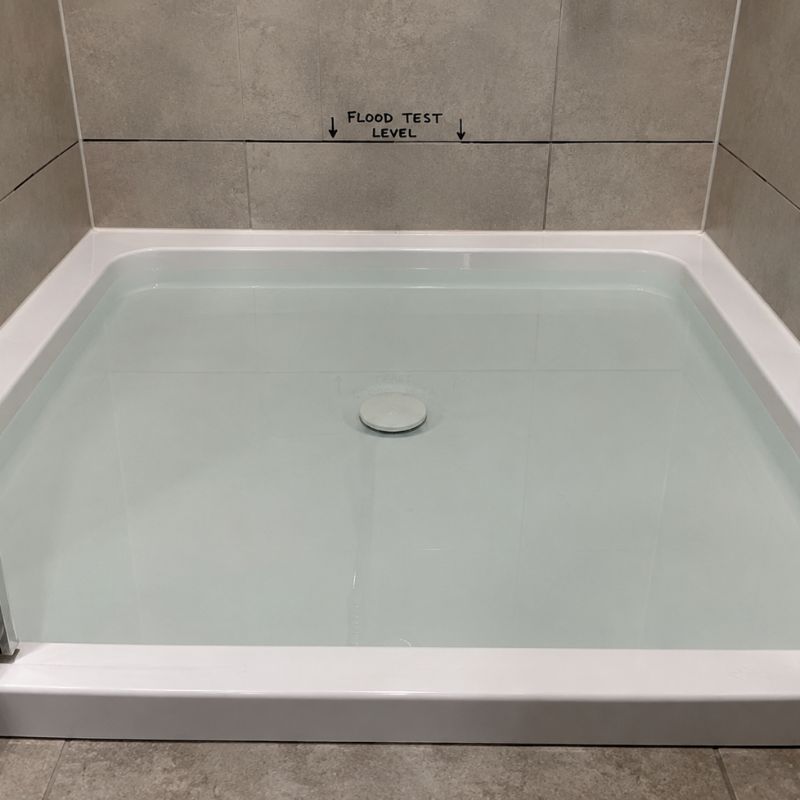
We plug the waste and flood the base, then leave it sitting while we take moisture readings from the dry side of the wall and watch for a change. If the reading climbs, water is getting through the base. If it does not, we test the walls and the screen separately. Thermal imaging comes out where water is running under a slab. It is methodical, it takes about an hour, and it beats pulling tiles up to have a look.
In most cases yes. If the membrane under the base is intact and the water is entering at the joints, the grout or the screen, the repair happens in the recess and the rest of the bathroom is untouched. A renovation only enters the conversation when the membrane has failed or was never installed and the room is already at the end of its life anyway. We confirm which with a flood test before quoting.
If the repair involves laying a new membrane, then yes, the waterproofing work should be documented and certified, and that paperwork matters if you sell or if strata is involved. A reseal or a regrout does not create a new membrane, so it does not attract a certificate. We will tell you which category your job falls into before we start, and you can read more on our waterproofing page.
