

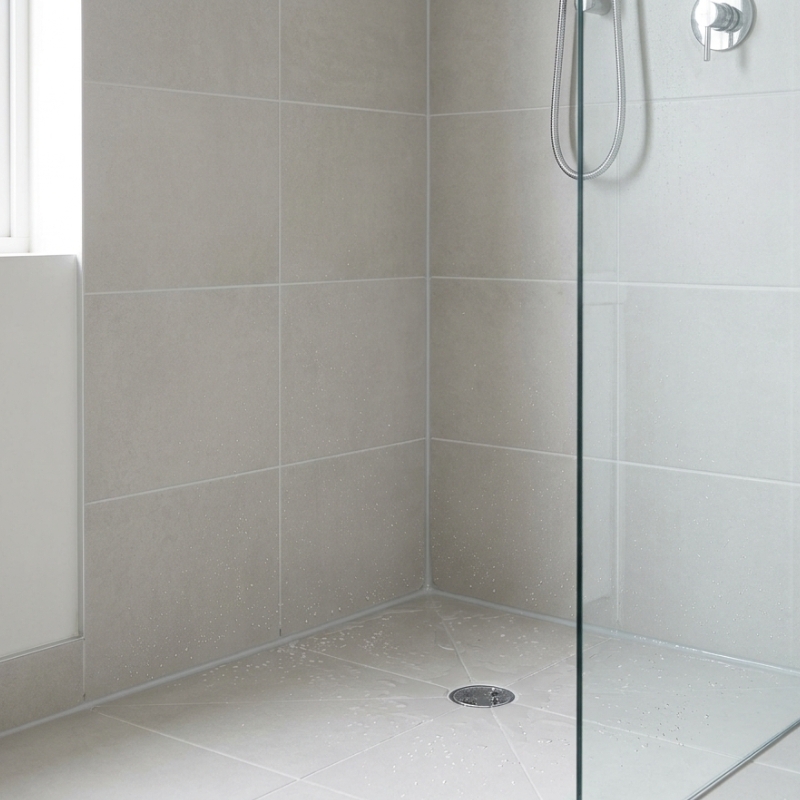
You’d think fresh grout would put an end to the puddles on the bathroom floor. Plenty of Sydney households find out otherwise, catching a shower leaking within weeks of a tidy touch-up. The new grout looks spotless — and the water still finds a way out. Here’s the uncomfortable bit: grout hardly ever causes the leak on its own. It’s just the first thing you see.
Grout Isn’t The Villain
Grout does one job: it fills the gaps between the tiles and neatens the surface. Waterproof, it is not. The stuff is porous, so water slows down as it goes through it — it doesn’t stop. The real barrier sits behind the tiles: a waterproof membrane. Split that membrane, and no amount of fresh grout will hold the water back.
And there are other weak points stacking up alongside it. Take the silicone around the screen, the tap penetrations, the wall-to-floor corners. Give it a few years, and it loses its stretch — and the moment it does, capillary action starts wicking moisture in behind the tiles. Then there’s the base itself. Plenty were never laid with enough fall, so water sits and eventually works its way under. Or it’s a hairline crack in the render, quietly doing the job of a channel that grout was never going to seal.
Which is why regrouting on its own so often disappoints: you’ve dressed up the symptom and walked straight past the cause.
What Testing Usually Uncovers
Finding the real escape route starts with proper investigation. A good technician brings a few tools to it. An infrared camera picks out the cooler, damp patches. A moisture meter tracks the readings from room to room. And dye tracing — that one follows the actual path the water takes once it disappears below the surface. A simple bucket test earns its keep too: plug the waste, put a shallow layer of water in the base without wetting the walls, and watch the surroundings overnight. Damp turning up means the floor membrane’s likely gone. Nothing? Then the walls or the plumbing are your prime suspects.
Pressure checks on the plumbing often turn up slow weeps at mixer bodies or copper joints. These ones hide behind the wall, so they masquerade as a tile failure even though regrouting does nothing for them. In older apartments, a bit of building movement can stretch the membrane just enough to open hairline splits. After that, water tracks sideways until it hits a joint, a grout line or the ceiling below — and only then does it show itself.
Effective Paths to a Dry Bathroom
The test results steer the repair. Sydney owners usually land on one of three options, each matched to a different kind of fault.
- Surface reseal. When the tests show the membrane is largely sound and there’s little movement, a surface treatment can do the job. The crew pulls out the old silicone and runs a flexible, mould-resistant product into every corner and change of plane. The grout gets sealed too — a penetrating sealer or an epoxy overlay over the top. Tiles don’t move, the cost stays sensible, and you’re back showering in no time.
- Localised membrane renewal. A breach confined to one wall or the floor can be sorted without gutting the room. Trades lift the affected tiles, grind back the residue and lay a new section of membrane that overlaps the intact area, then finish with matching replacement tiles. It’s more work than a reseal, but it spares you a full renovation and keeps the mess contained.
- Full strip-out and rebuild. Widespread membrane failure, rotten studs or an incorrect fall call for a reset. Tiles, screed and sometimes the wall sheeting all come out, a modern compliant membrane goes in, and the base is re-screeded to a proper gradient. It’s disruptive, no way around that — but reopening the bathroom with current materials and an AS 3740-certified membrane buys real long-term peace of mind.
Whichever path you take, insist on photos of every waterproofing stage. Documented workmanship protects your resale value and any future insurance claim.
For a closer look at tapware faults that can pass themselves off as tile problems, have a read of the earlier post on fixing a leaky shower faucet.
Ongoing Defence Against Future Leaks
Prevention costs a fraction of another round of demolition. Reseal the grout every couple of years with a decent penetrating product. The perimeter silicone won’t last forever either — swap it out somewhere around the five-to-seven-year mark, before it goes hard and starts lifting. A bathroom exhaust fan rated at 90 L/s or more will clear the steam fast and help every surface dry out. When the plumber’s in for a routine washer or cartridge change, get them to check for seepage behind the escutcheons. And where hairline cracks keep coming back, swap those corners from rigid grout to a flexible polyurethane sealant that can move with the wall.
Sydney’s climate runs from muggy summers to cool winters, and that thermal cycle shifts the walls just enough to stress a weak joint. A bit of planned maintenance turns those seasonal swings into a non-event.
When Expertise Matters
Some warning signs are worth calling a professional over:
- Mould that keeps coming back within a fortnight of cleaning
- Grout lines still damp long after the shower’s finished
- Stains on the ceiling in the room below
- Silicone pulling away, or feeling chalky to the touch
- A distinct plumbing noise that hints at a hidden drip
Qualified waterproofers and licensed plumbers carry the moisture meters, borescopes, and pressure plugs that isolate a fault with minimal damage. NSW Fair Trading sets out licence classes and consumer rights plainly at Waterproofing | NSW Fair Trading.
A leak that laughs off fresh grout is telling you something deeper is wrong. Find that root cause, match the repair to the fault, and you’ll get a bathroom that stays bone-dry long after the grout haze has been wiped away.


