

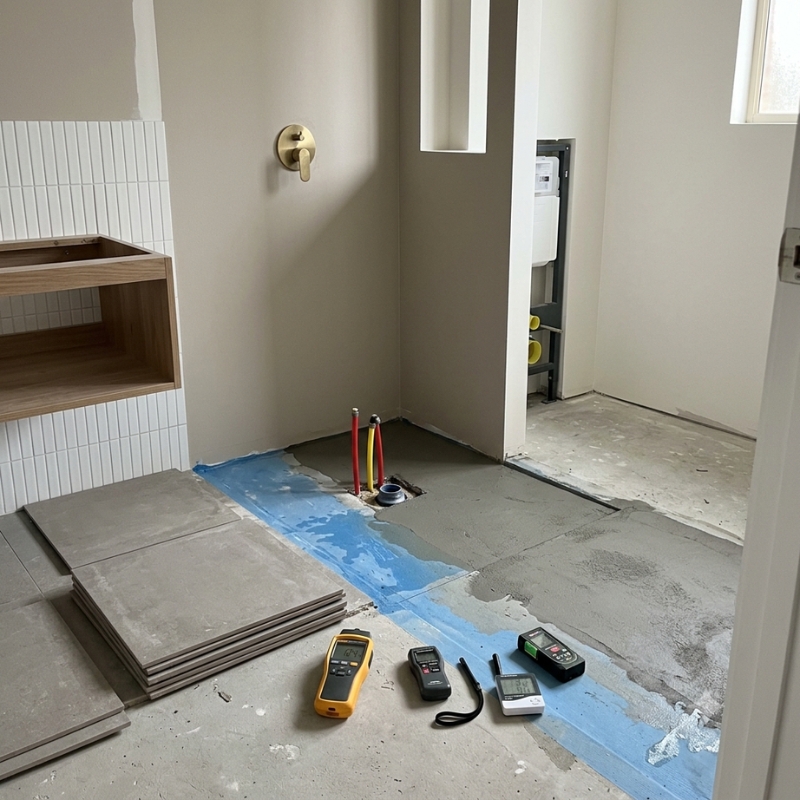
Plenty of Sydney homeowners are dreaming of a spa-like bathroom. That dream can curdle fast, though, if a hidden leaking shower has already been quietly soaking the structure. Moisture behind tiles doesn’t sit politely in one spot — capillary action pulls it along grout joints, into timber studs, even under the floorboards next door. Book a leak inspection before the demolition starts and you walk into a 2026 makeover with real information, a budget that holds, and far fewer nasty surprises along the way.
Hidden Damage Risks
Sydney’s housing stock reads like a time capsule. Federation terraces pair double-brick walls with narrow cavities; post-war cottages lean on hardwood framing; high-rise apartments pour their bathrooms into concrete pods. Each one behaves differently when the waterproofing gives out.
Thermal cameras tend to pick up cold patches around hob junctions in older masonry homes — that chill is evaporative cooling from constant damp. In a timber-framed place, a moisture meter held to the skirting can jump from a healthy 12 percent to over 20 percent in a couple of seconds, which is decay on the way. Apartments tell a different story again: a hairline crack in the floor slab lets drips run sideways until they surface on a neighbour’s ceiling two floors down.
Early detection matters because all this develops in silence, often for years. Lift one loose tile, and you might find crumbly render — but only a proper, systematic inspection maps the full moisture footprint. With that map in hand, you can pin the origin (dodgy grout, a fractured pipe, a membrane that never bonded to the substrate) and fix only what actually needs it. Less waste, less time lost.
Timing an Inspection
Most bathroom redesigns start with sketches of tapware and tile patterns. Slot an inspection into that planning window, and your choices stay grounded. Two moments are worth targeting.
First, get a check done during the initial site measure. The builder’s already working out demolition volumes, so an inspector wandering through with a moisture probe gets in nobody’s way. If the report comes back bone-dry, everyone can relax knowing the start date holds.
Second, call an assessor the moment you spot sluggish drainage, dark grout lines, or a stubborn earthy smell. Those are the tells of damp behind the scenes. Catch the source early, and you might get away with a quick sealant patch instead of a full membrane replacement.
Leave roughly a month between the inspection and the first swing of the hammer. That buffer gives consultants time to write up their findings, lets strata committees review the paperwork under NSW rules, and gives designers room to tweak the layout if structural repairs surface. Trades then fold any remedial work into the same slot set aside for demolition, and the project keeps moving.
Choosing a Capable Specialist
Licensing is one filter. Field experience is another. A waterproofer who only does new builds can miss the quirks of a heritage terrace, so you’re better off with someone who splits their time between plumbing diagnostics and remediation on lived-in homes.
Expect a written report that spells out:
- The methods used — calibrated capacitance meters, dye tests, pressure gauges.
- Annotated photos with coloured overlays marking the saturation zones.
- Specific repair steps, not a blanket “retile everything”.
That kind of clarity protects you when you’re comparing renovation quotes. A contractor happy to work with the report shows respect for the building envelope; one who waves it away is lining up to repeat the old mistakes. And for the smaller stuff that sometimes turns up — a worn spindle behind a mixer tap, say — our guide on fixing a leaky shower faucet shows how minor hardware faults snowball if you leave them.
Budget and Schedule Benefits
Unplanned water damage wrecks budgets on a regular basis. Picture a stripped-out bathroom where damp framing forces a pause for drying gear. Every extra day of hire adds cost and shoves back the tilers, who are juggling three other jobs. Start with a leak assessment instead and you find the moisture while the walls are still intact — so the drying can run alongside fixture ordering rather than holding everything up. Sydney suppliers often quote four to six weeks for custom vanities or imported tiles; that lead time swallows a few days of dehumidification without blinking.
Re-waterproofing only the affected quadrant of a shower recess trims the material bill too. Modern membranes — brush-on liquids and sheet systems alike — sell by the square metre, so shrinking the coverage area even a little can knock hundreds off. Labour tracks the same way, since trades price per linear metre of joint sealing and tile laying.
Health and Compliance
The NSW climate swings from humid summers to cold winters — prime conditions for mould unless the moisture’s kept in check. NSW Health warns that spores aggravate asthma and other respiratory conditions. A thorough inspection finds the spore nests inside wall cavities before airflow spreads them through the house, and crews can treat the framing with anti-fungal solutions while the access is still open.
Then there’s the compliance side. In a strata scheme, anything involving waterproofing counts as major work under the NSW rules — the Strata Schemes Management Regulation 2016 specifically leaves it off the “minor renovations” list — so it needs owners corporation sign-off, and the committee can insist on a waterproofer’s certificate showing common property stays protected. An independent moisture report satisfies most committees and smooths the approval. For standalone houses, Australian Standard AS 3740 sets the performance benchmarks; the inspector’s repair notes usually cite those clauses, which gives certifiers confidence the new membranes will pass final checks. NSW Fair Trading’s section on building and renovating makes the same point — heading off leaks at the start is far cheaper than litigating defects later.
Sustainability Upsides
Sydney councils keep tightening their landfill diversion targets. Gutting a bathroom back to the timber studs throws off a surprising amount of rubble — tiles, render, screed and plasterboard stack up fast. Deal with the leaks early, and you often keep more of the wall intact. Fewer skip bins on the kerb, less embodied energy thrown away.
Material choices get better, too. Low-VOC sealants and recycled-content tiles have moved from niche to mainstream, and they bond best to a substrate that’s genuinely dry. Because a leak inspection gives you moisture readings in plain percentages, builders can confirm conditions sit inside the manufacturer’s limits before they crack open a tube of adhesive.
Long-Term Asset Value
Buyers rarely turn up with a moisture meter. But they do notice a musty smell or hairline cracks in freshly painted walls. Hand over a dated leak report with before-and-after photos and you’re signalling that the renovation covered durability, not just looks. In markets like Randwick or Balmain — where a listing can pull dozens of groups through on the first inspection weekend — that documentation nudges a place ahead of the similar-looking homes down the street.
Insurers notice as well. Some will offer a lower excess on water-damage claims if recent waterproofing certificates come with the policy. The discounts vary, but even a modest one sweetens the return on an inspection that probably costs less than the premium hike a future leak would trigger.
Planning Pays Off
Bathroom trends will always swing around — terrazzo basins one year, brushed nickel mixers the next. But the prettiest tile palette means nothing if water’s seeping underneath it. A leak inspection ties the design dream to structural reality. It pulls risk out of the budget, keeps the trades on schedule, protects your health and trims the environmental hit. Get this bit right and every other call — membrane, tile gauge, grout colour — has a solid footing.
Sydney homeowners planning a 2026 upgrade have the most to gain from flipping the usual order: sort out the moisture first, then go chasing the perfect finish.


