

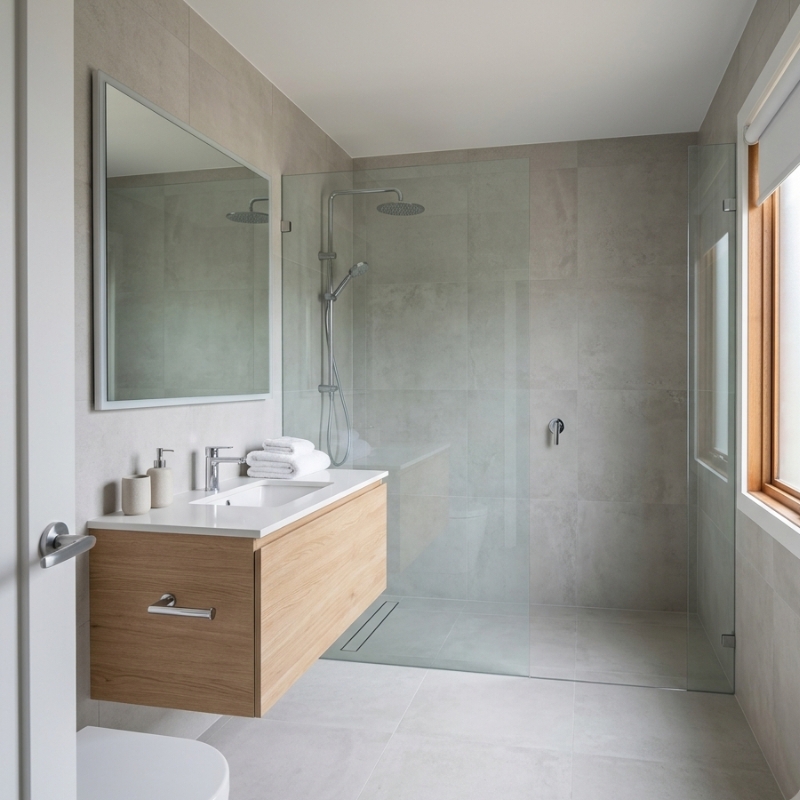
Fast Builds, Slow Leaks
Sydney’s building boom threw up thousands of new bathrooms over the past decade — and a growing share are leaking well before their seventh birthday. Owners who thumb leaking shower repair into their phones tend to blame a cracked tile. The real causes sit deeper than that.
Developers were racing settlement dates on towers from Parramatta to Green Square. Tight programmes squeezed the slow, unglamorous art of waterproofing.
- Membranes sometimes got half the cure time the manufacturer asked for.
- Second coats quietly vanished when a site manager was chasing an inspection sign-off.
- Apprentice tilers pushed grout into wet corners, sealing moisture in under the tiles.
Then came La Niña and three soggy summers back to back, and suddenly those shortcuts had nowhere to hide. Humidity slows evaporation inside the screed, so even a pinhole turns into a capillary highway. Retrofitted bathrooms from the 2000s are sliding into the same mess — acrylic trays once sold as “lifetime” now flex and craze after years of hot showers and harsh cleaners.
Where Water Slips Through
A torch, a damp-meter and fifteen minutes will usually find the entry point. The same handful of spots keep turning up, in strata units and freestanding homes alike.
- Inside corners of the recess move more than flat walls do, and membranes split right at the bend.
- Mixer tap penetrations hide behind a smart trim plate — but skip the bead of neutral-cure silicone around that circular cut-out and water follows the pipe straight into the wall.
- Plastic drain flanges warp when someone tips a bucket of near-boiling mop water down the floor waste, leaving a millimetre gap under the lip.
- Aluminium glass-screen channels fixed without gaskets lean entirely on silicone — and that bead shrinks within about five years, so drips find the screed.
Repairs That Hold Up
Panic demolition is rarely the right opening move. A good waterproofer tests how deep the saturation runs, checks the membrane’s elasticity, and matches the fix to what the readings show.
- Targeted membrane injection. Lift just two rows of tiles, inject low-viscosity polyurethane, relay the originals the same day. It costs a fraction of a rebuild, which is why strata schemes keen to dodge a special levy love it.
- Epoxy regrouting. Cement grout is porous. Overlaying it with epoxy seals the mosaic floors you find in Balmain terraces without disturbing a single heritage tile.
- Full membrane rebuild. Once moisture has travelled deeper than roughly 15 mm into the screed, only stripping back to the substrate and laying a flexible Class III membrane gives you certainty — Ardex WPM 155 Rapid and Mapei Mapelastic Turbo are the ones we reach for.
- Tray replacement. Hairline cracks in acrylic bases almost never stop spreading. Switch to a stone-composite tray rated for thermal cycling and the weak point’s gone for good, ten-year warranty included.
Habits That Keep Bathrooms Dry
The best repair in the world fails if daily habits keep soaking it. A few small routines head off most of the repeat leaks Sydney insurers ever see.
- Run the exhaust fan for a good fifteen minutes after the last morning shower. Humidity drops; membranes stay relaxed.
- Check the silicone once a year. If a fingertip drags crumbs of it away from the glass channel, re-seal before water finds the gap.
- Read the water meter, keep off the taps for ten minutes, then read it again. Any movement you can’t explain flags hidden seepage early.
Smart sensors add a bit of extra insurance. Matchbox-sized Bluetooth humidity tags now go for under $80 and fire a push alert when the humidity behind the vanity sits above 70 percent for four hours straight. Early adopters in Potts Point apartments got through the wet summer of 2025 without a mould patch in sight.
For a closer look at the minor drips that often kick off the whole chain, our guide on fixing a leaky shower faucet breaks down valve weeps and what they do to grout.
Choosing Trades the Insurers Trust
Loss assessors have run out of patience with owners who sit on a known leak — some policies now hit you with a higher excess if it drags on past sixty days. Moving quickly counts. Picking the right trade counts for more.
- Licensing. NSW Fair Trading treats waterproofing as a specialist field with its own licence. Check any quoted number straight on the Fair Trading portal — don’t take a screenshot on faith.
- Specification detail. A solid quote names the membrane brand, the minimum dry-film thickness and the curing schedule. A vague promise of “premium waterproofing” leaves you no leverage when faults show up.
- Warranty realism. Ten years is about the ceiling most membrane makers will back. A firm offering longer without the insurance to match may not be around to honour the paper.
For the legal backdrop, including the AS 3740 compliance notes, NSW Fair Trading’s plain-language summary of waterproofing standards is worth a read.
Keeping the Ceiling Below Dry
Leaking showers across Sydney come back to the same three things: rushed builds, ageing materials and relentless humidity. None of them is going anywhere. But evidence-based repairs — from pinpoint injections to full membrane rebuilds — stop the rot. Layer on a few maintenance habits, insist on licensed specialists, and that brown stain on the downstairs ceiling never gets the chance to form.

)
&description=&image=https://leakingshowerrepairs.com.au/wp-content/uploads/2026/07/Why-So-Many-Sydney-Showers-Are-Leaking-in-2026-And-the-Fixes-That-Last.jpg)