

Second Bathrooms And Summer Heat
Leaking Shower Repairs Cumberland
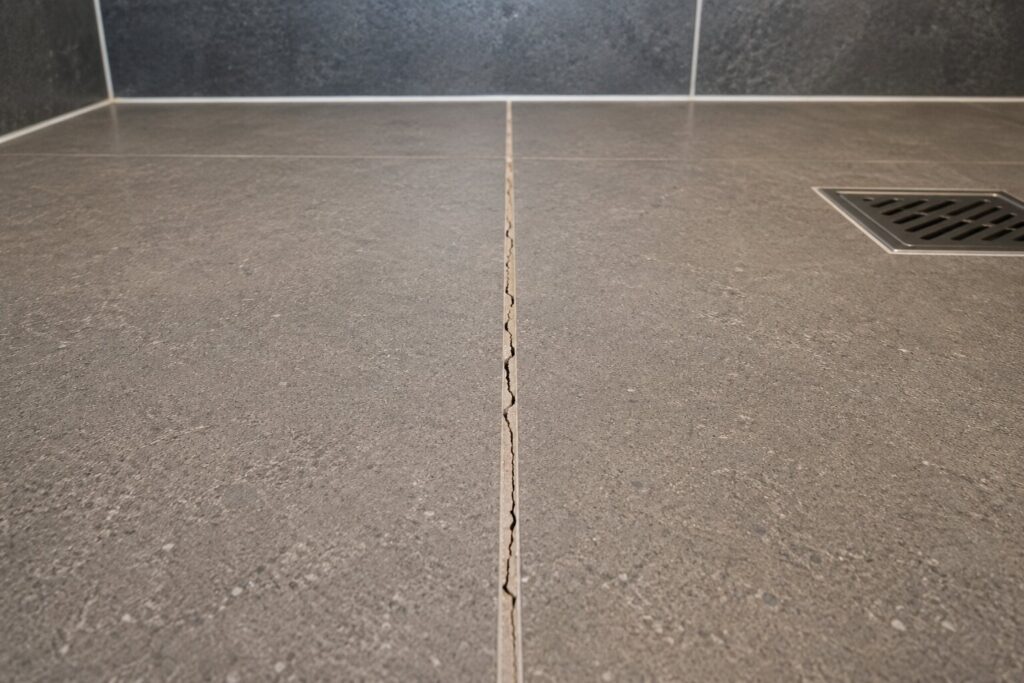
Grout that cracks in the same joint every year is not bad luck. It is a building doing what buildings do.
Summers out here are a different proposition to the coast, and the daily swing between a forty degree afternoon and a cool night puts real movement through a slab. Rigid cement grout has nowhere to put that, so it splits, usually along the same lines it split last time. Add the number of granny flats and second bathrooms across this council area, plenty of them built fast, and you have most of our callouts in two sentences.
Get a repair quote
Same crack, different cause
What is actually moving
Cracked grout gets blamed on cheap workmanship far more often than it deserves. Usually something else is going on.
What you see | What it usually means | What fixes it |
Hairline cracks reopening in the same joints | Thermal movement the rigid grout cannot absorb | Rake to depth, refill with a flexible grout |
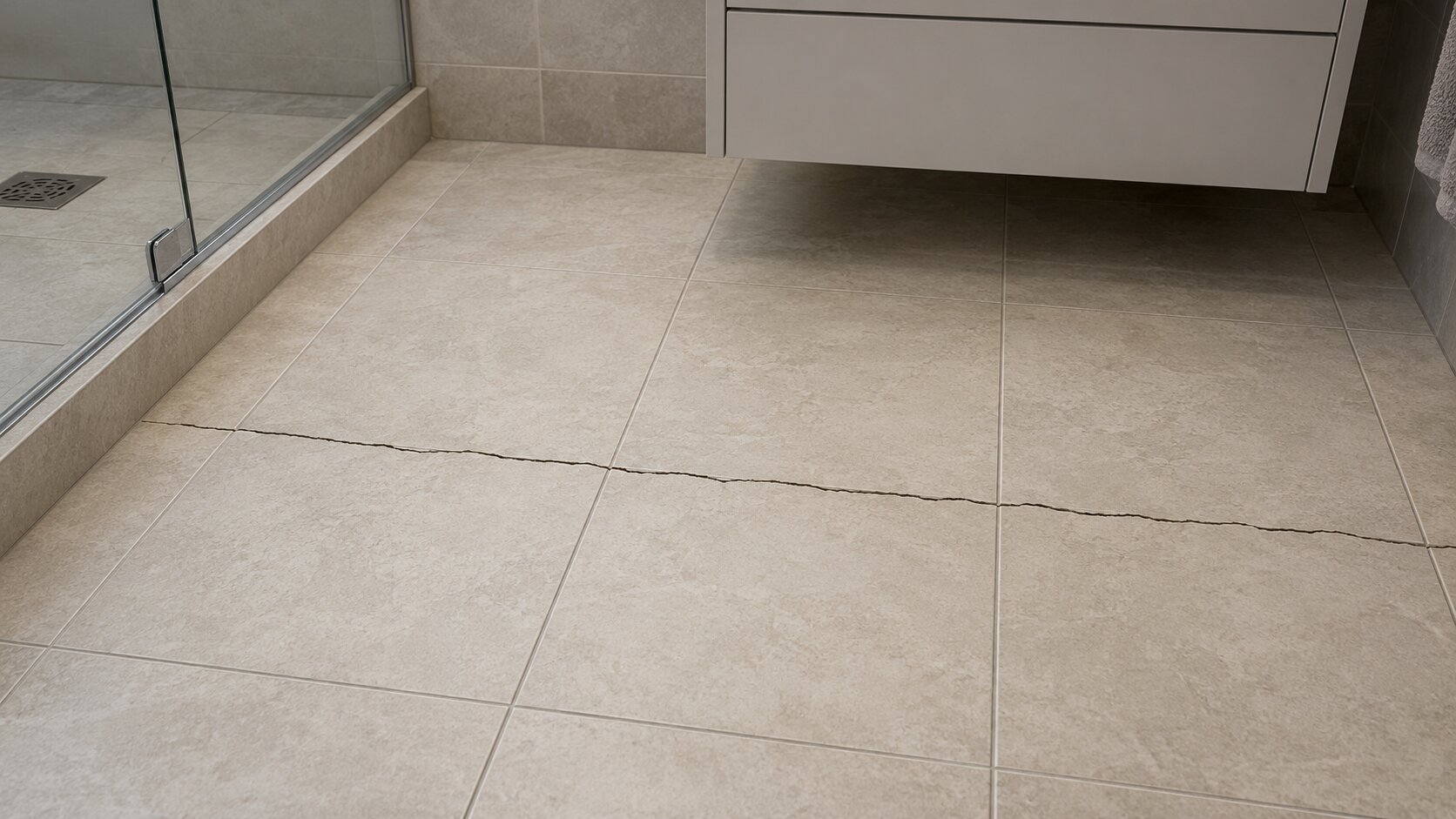
Cracks running across several tiles in a line | Slab or footing movement below | Investigate the structure before any tiling |
Grout crumbling to powder underfoot | Old cement grout at the end of its life | Full regrout of the floor joints |
Silicone split at an internal corner | A rigid bead in a joint that needs to flex | Cut out, dry, reseal in a neutral cure product |
Damp in a room behind a newer shower | Membrane thin, patchy or never installed | Flood test, then strip and new membrane |
Damp near a second bathroom only | Wet area built fast without junction detailing | Test that room specifically, not the main bathroom |
Everything we do, from Auburn out
The Cumberland service list
Seven services, each linking to its own page. Grouting leads here because in this council area it is the job that comes up most.
Tile Grouting Cumberland
Out here the ground and the building move more than most people realise, and rigid grout is the first thing to give. We rake the failed joints out to full depth rather than skimming over them, then refill with a flexible grout that can take a forty degree January and a cold July without splitting again.
Water Leak Detection Cumberland
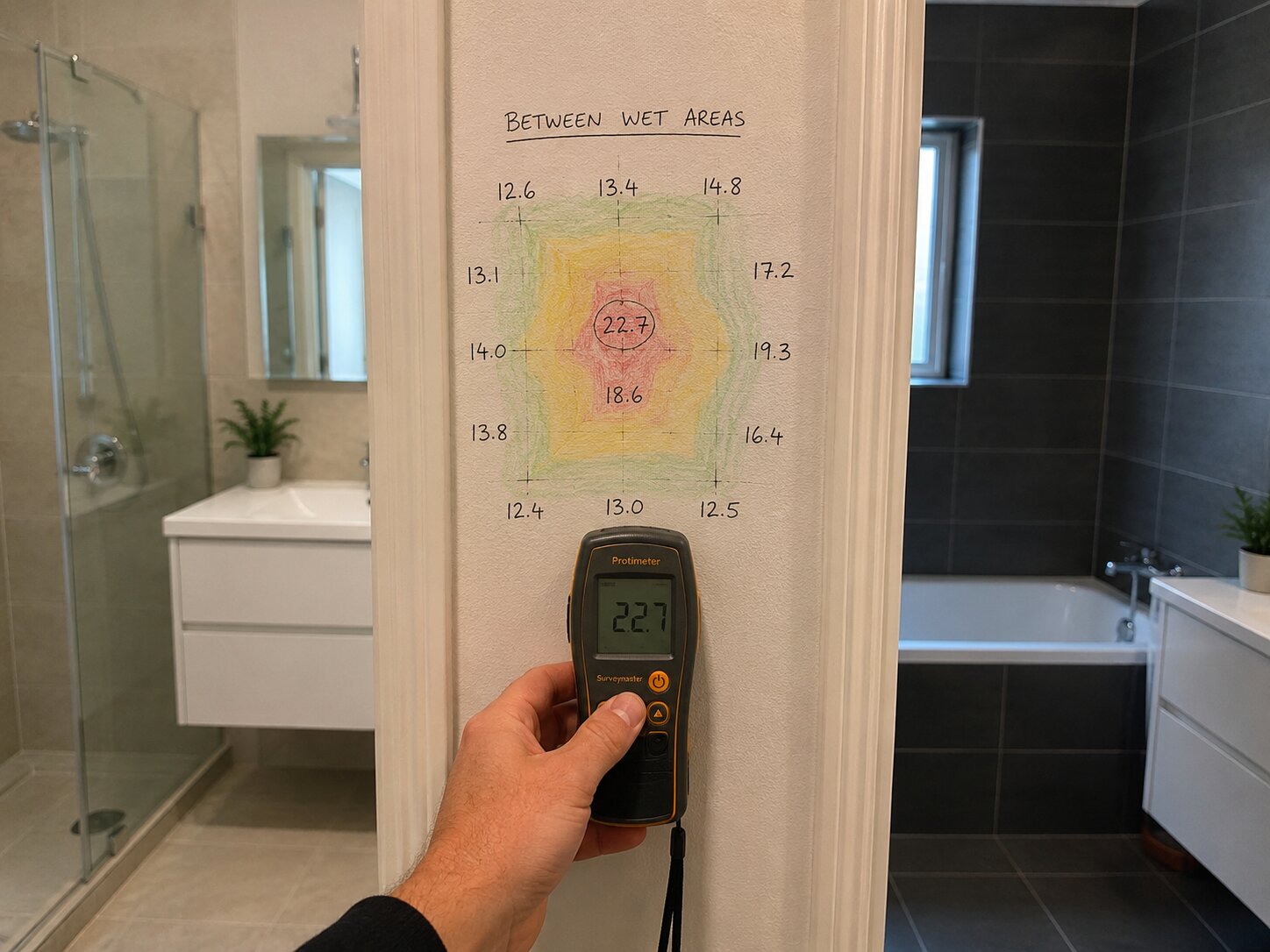
Plenty of homes here have two or three wet areas, and the damp does not always belong to the one you suspect. We test each in turn with a plugged flood test and moisture mapping, so nobody pays to repair a shower that was never leaking.
Tiling Services Cumberland
When tiles have to lift for a membrane, they go back down by us. In a secondary dwelling the original tile is often a current builder line and still available, which makes the match straightforward. In an older Guildford or Granville bathroom it usually is not, and we will show you the options first.
Figures we can evidence
Built fast, and it shows at the joints
The wet areas that were never going to last
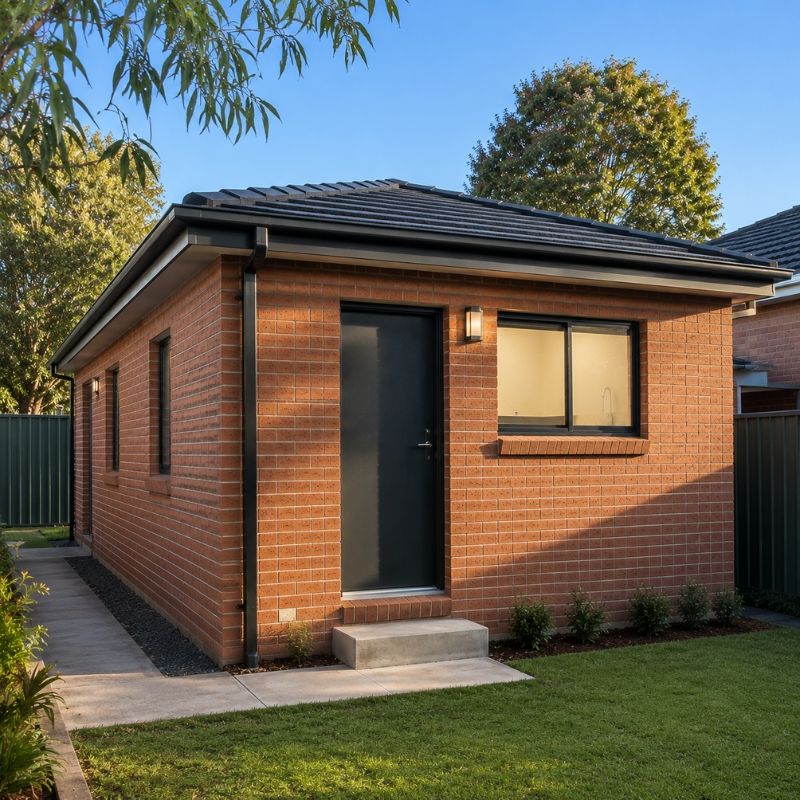
Cumberland has one of the highest concentrations of secondary dwellings anywhere in Sydney. Granny flats out the back, studios over garages, second bathrooms carved out of an existing hallway. Most of them are perfectly sound buildings. What lets them down is the detail work in the wet area, because that is where a fast job saves the most time.
The membrane stops short of the wall junction. The waste flange gets sealed with whatever was on the van. The fall to the waste is close enough rather than right, so water ponds in one corner and sits there. None of it shows on handover day and all of it shows five years later.
We test these rooms specifically rather than assuming the main bathroom is the culprit, because in a house with three wet areas the damp on a wall tells you very little about which one is leaking.
What we check in a second wet area

Four steps, and we test each room
How we work through a Cumberland property
1
Tell us what shows
Where the damp is and how many wet areas the property has. That second answer changes the plan.
2
Test each wet area
Flood test and moisture map, room by room, so the right one gets repaired.
3
One price, written down
Scope and cost before anything is cut, and which room it applies to.
4
Repair it, then prove it
Work completed, then flood tested again before we pack up.

Heat is a building material problem
Why western Sydney is harder on a shower
A bathroom in Merrylands or Greystanes sees summer temperatures that a bathroom in Manly simply does not. The difference is not a few degrees on the worst day, it is the accumulated effect of hundreds of hot afternoons and cool nights putting the slab, the bed and the tiles through a cycle every twenty four hours.
Materials handle that differently. Tile barely moves. Cement grout has almost no give at all. The adhesive bed underneath moves more than either. Over years, the stress concentrates where the least flexible material sits, which is the grout joint, and it opens.
That is why we specify differently here. Flexible grout in the floor joints, neutral cure silicone in the corners that need to move, and honest advice that a rigid product will fail again no matter how carefully it goes in.
Auburn out to Pemulwuy
The Cumberland suburbs we cover
The full council area, from the Auburn area west through Merrylands and Greystanes. Linked suburbs have their own page, the rest we service without one.
Leak Detection Auburn
Leak Detection Berala
Leak Detection Girraween
Leak Detection Granville
Leak Detection Greystanes
Leak Detection Guildford
Leak Detection Holroyd
Leak Detection Lidcombe
Leak Detection Mays Hill
Leak Detection Merrylands
Leak Detection Pemulwuy
Leak Detection Pendle Hill
Leak Detection Regents Park
Leak Detection Rookwood
Leak Detection Toongabbie
Leak Detection Woodpark
Leak Detection Yennora
Leaking Shower Repairs Holroyd
Leaking Shower Repairs Pendle Hill
Leaking Shower Repairs Rookwood
Leaking Shower Repairs Toongabbie
Leaking Shower Repairs Woodpark
Waterproofing Services Auburn
Waterproofing Services Berala
Waterproofing Services Girraween
Waterproofing Services Granville
Waterproofing Services Greystanes
Waterproofing Services Guildford
Waterproofing Services Holroyd
Waterproofing Services Lidcombe
Waterproofing Services Mays Hill
Waterproofing Services Merrylands
Waterproofing Services Pemulwuy
Waterproofing Services Pendle Hill
Waterproofing Services Regents Park
Waterproofing Services Rookwood
Waterproofing Services Toongabbie
Waterproofing Services Woodpark
Waterproofing Services Yennora
What the phone calls sound like
Questions worth answering properly
Because something is moving and the grout is not allowed to. Out here the summer heat is genuinely harder on a building than it is closer to the coast, and the daily expansion and contraction goes straight into the most rigid part of the shower, which is the cement grout. Add a slab on reactive ground and you get hairline cracks reopening in the same joints every year. The fix is not more grout of the same kind. It is raking the joints properly and refilling with a flexible product that can move.
You cannot tell by looking, which is the honest answer. A tiled shower that was never waterproofed looks identical to one that was. A timed flood test tells you within a couple of hours, because a base with a sound membrane holds water and one without it does not. If the property is newer, ask for the waterproofing certificate from the original build, as it should exist. If it does not, that is information in itself.
Yes, and we do it often. Secondary dwellings across this council area were frequently built to a tight budget, and the wet area is usually where that shows. Sometimes the membrane is thin, sometimes it stops short of the wall junctions, sometimes it is not there at all. The repair is the same list as any other shower, but the flood test matters more because assuming a membrane exists is exactly how people get caught.
It needs the same standard of waterproofing as any other wet area, whether it is an ensuite, a second bathroom, or the bathroom in a secondary dwelling out the back. The rules do not scale down with the size of the room. Where we see problems is not usually corner cutting on purpose, it is a small job done fast without the junctions and the waste flange being detailed properly, and those are precisely the points that fail first.
Grout splitting in the same place every summer? There is a reason, and it is fixable.
Second Bathrooms And Summer Heat
Leaking Shower Repairs Cumberland
Grout that cracks in the same joint every year is not bad luck. It is a building doing what buildings do.
Summers out here are a different proposition to the coast, and the daily swing between a forty degree afternoon and a cool night puts real movement through a slab. Rigid cement grout has nowhere to put that, so it splits, usually along the same lines it split last time. Add the number of granny flats and second bathrooms across this council area, plenty of them built fast, and you have most of our callouts in two sentences.
Get a repair quote
Same crack, different cause
What is actually moving
Cracked grout gets blamed on cheap workmanship far more often than it deserves. Usually something else is going on.
What you see | What it usually means | What fixes it |
Hairline cracks reopening in the same joints | Thermal movement the rigid grout cannot absorb | Rake to depth, refill with a flexible grout |
Cracks running across several tiles in a line | Slab or footing movement below | Investigate the structure before any tiling |
Grout crumbling to powder underfoot | Old cement grout at the end of its life | Full regrout of the floor joints |
Silicone split at an internal corner | A rigid bead in a joint that needs to flex | Cut out, dry, reseal in a neutral cure product |
Damp in a room behind a newer shower | Membrane thin, patchy or never installed | Flood test, then strip and new membrane |
Damp near a second bathroom only | Wet area built fast without junction detailing | Test that room specifically, not the main bathroom |
Everything we do, from Auburn out
The Cumberland service list
Seven services, each linking to its own page. Grouting leads here because in this council area it is the job that comes up most.
Tile Grouting Cumberland
Out here the ground and the building move more than most people realise, and rigid grout is the first thing to give. We rake the failed joints out to full depth rather than skimming over them, then refill with a flexible grout that can take a forty degree January and a cold July without splitting again.
Water Leak Detection Cumberland
Plenty of homes here have two or three wet areas, and the damp does not always belong to the one you suspect. We test each in turn with a plugged flood test and moisture mapping, so nobody pays to repair a shower that was never leaking.
Tiling Services Cumberland
When tiles have to lift for a membrane, they go back down by us. In a secondary dwelling the original tile is often a current builder line and still available, which makes the match straightforward. In an older Guildford or Granville bathroom it usually is not, and we will show you the options first.
Figures we can evidence
20+
Years repairing showers across Sydney
12
Cumberland suburbs with their own page
7
Services, all delivered in house
6
Days a week, starting at 6:30 AM
What we check in a second wet area
Built fast, and it shows at the joint
The wet areas that were never going to last
Cumberland has one of the highest concentrations of secondary dwellings anywhere in Sydney. Granny flats out the back, studios over garages, second bathrooms carved out of an existing hallway. Most of them are perfectly sound buildings. What lets them down is the detail work in the wet area, because that is where a fast job saves the most time.
The membrane stops short of the wall junction. The waste flange gets sealed with whatever was on the van. The fall to the waste is close enough rather than right, so water ponds in one corner and sits there. None of it shows on handover day and all of it shows five years later.
We test these rooms specifically rather than assuming the main bathroom is the culprit, because in a house with three wet areas the damp on a wall tells you very little about which one is leaking.

Four steps, and we test each room
How we work through a Cumberland property
1
Tell us what shows
Where the damp is and how many wet areas the property has. That second answer changes the plan.
2
Test each wet area
Flood test and moisture map, room by room, so the right one gets repaired.
3
One price, written down
Scope and cost before anything is cut, and which room it applies to.
4
Repair it, then prove it
Work completed, then flood tested again before we pack up.
Heat is a building material problem
Why western Sydney is harder on a shower
A bathroom in Merrylands or Greystanes sees summer temperatures that a bathroom in Manly simply does not. The difference is not a few degrees on the worst day, it is the accumulated effect of hundreds of hot afternoons and cool nights putting the slab, the bed and the tiles through a cycle every twenty four hours.
Materials handle that differently. Tile barely moves. Cement grout has almost no give at all. The adhesive bed underneath moves more than either. Over years, the stress concentrates where the least flexible material sits, which is the grout joint, and it opens.
That is why we specify differently here. Flexible grout in the floor joints, neutral cure silicone in the corners that need to move, and honest advice that a rigid product will fail again no matter how carefully it goes in.
Auburn out to Pemulwuy
The Cumberland suburbs we cover
The full council area, from the Auburn area west through Merrylands and Greystanes. Linked suburbs have their own page, the rest we service without one.
Auburn
Berala
Girraween
Granville
Greystanes
Guildford
Lidcombe
Mays Hill
Merrylands
Pemulwuy
Regents Park
Yennora
Holroyd
Pendle Hill
Rookwood
Toongabbie
Woodpark
Solid chip: suburb page you can open Dashed chip: serviced, no page yet
Building and drainage approvals across this area sit with Cumberland City Council, and secondary dwelling requirements are worth checking before any bathroom work starts.
The four we answer most
Questions about newer wet areas
Because something is moving and the grout is not allowed to. Out here the summer heat is genuinely harder on a building than it is closer to the coast, and the daily expansion and contraction goes straight into the most rigid part of the shower, which is the cement grout. Add a slab on reactive ground and you get hairline cracks reopening in the same joints every year. The fix is not more grout of the same kind. It is raking the joints properly and refilling with a flexible product that can move.
You cannot tell by looking, which is the honest answer. A tiled shower that was never waterproofed looks identical to one that was. A timed flood test tells you within a couple of hours, because a base with a sound membrane holds water and one without it does not. If the property is newer, ask for the waterproofing certificate from the original build, as it should exist. If it does not, that is information in itself.
Yes, and we do it often. Secondary dwellings across this council area were frequently built to a tight budget, and the wet area is usually where that shows. Sometimes the membrane is thin, sometimes it stops short of the wall junctions, sometimes it is not there at all. The repair is the same list as any other shower, but the flood test matters more because assuming a membrane exists is exactly how people get caught.
It needs the same standard of waterproofing as any other wet area, whether it is an ensuite, a second bathroom, or the bathroom in a secondary dwelling out the back. The rules do not scale down with the size of the room. Where we see problems is not usually corner cutting on purpose, it is a small job done fast without the junctions and the waste flange being detailed properly, and those are precisely the points that fail first.
