

Apartment Wet Areas, City Of Sydney
Leaking Shower Repairs Sydney CBD
In a house a shower leak is your problem. Eleven floors up it belongs to three people at once.
City apartments change the job in every direction. The water lands in someone else’s living room. The strata scheme wants a cause in writing before anyone approves anything. Building management controls the lift, the loading dock and the hours you can make noise. We work in that all week, so none of it slows us down.
Get a repair quote
Why the same leak costs more up here
A house leak against an apartment leak
The failure is identical. Everything that happens afterwards is not.
Stage | In a house | In a city apartment |
Who notices first | You do, months in | The neighbour below, within days |
Where the water goes | Into your own floor and walls | Along the slab topping into someone else's ceiling |
Who has to approve the work | You | Often you, the owners corporation and building management |
Getting materials in | Park out the front | Loading dock booking, service lift, restricted hours |
Cost of guessing wrong | You open your own wall | You open a stranger's ceiling for nothing |
What settles the argument | The repair working | A written finding naming the actual source |
Docks, lifts and noise windows
Getting into the building is half the job
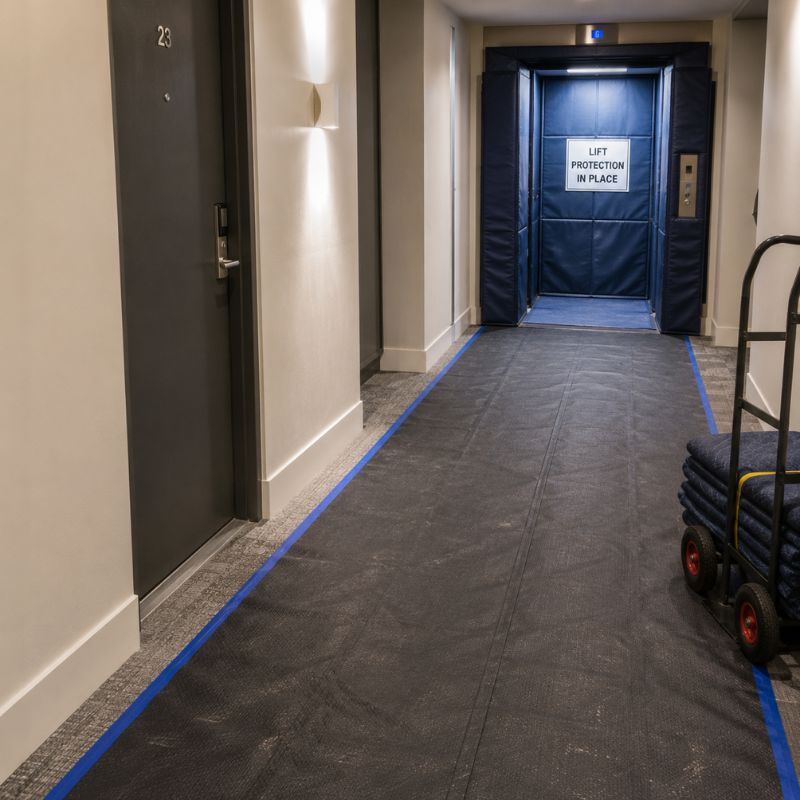
Anyone who has tried to run a trade job in a city tower knows the pattern. The loading dock takes bookings a week out. The service lift needs padding and a time slot. Noisy work is fenced into a window that suits everyone except the person doing it. Miss any of that and you have burned a day without touching a tile.
We handle the arrangements rather than turning up and hoping. Dock and lift booked before the crew leaves the yard, protection down through the common area corridor, and the wet trades sequenced so the noisy part lands inside the permitted hours. If the building requires an induction or a swipe, we sort it in advance.
The other constraint is the slab itself. There is no subfloor to get under and no bearers to inspect, so everything is read from above and from the apartment below. That makes accurate testing more important here than anywhere, because there is no cheap way to have a look.
What we sort before we arrive

General information on how repairs and common property work in a strata scheme is published by NSW Fair Trading.
All seven, inside the city
Our services in the Sydney CBD
Every one of these is delivered by our own crew, sized and sequenced for apartment work. Each links through to its full service page.
Water Leak Detection Sydney CBD
Leads every job in the city, because opening the wrong thing here is expensive and public. Timed flood test on the base, moisture mapping through the apartment, thermal imaging across the slab, and where access allows, confirmation from the ceiling below. You get a cause, not a theory.
Waterproofing Sydney CBD
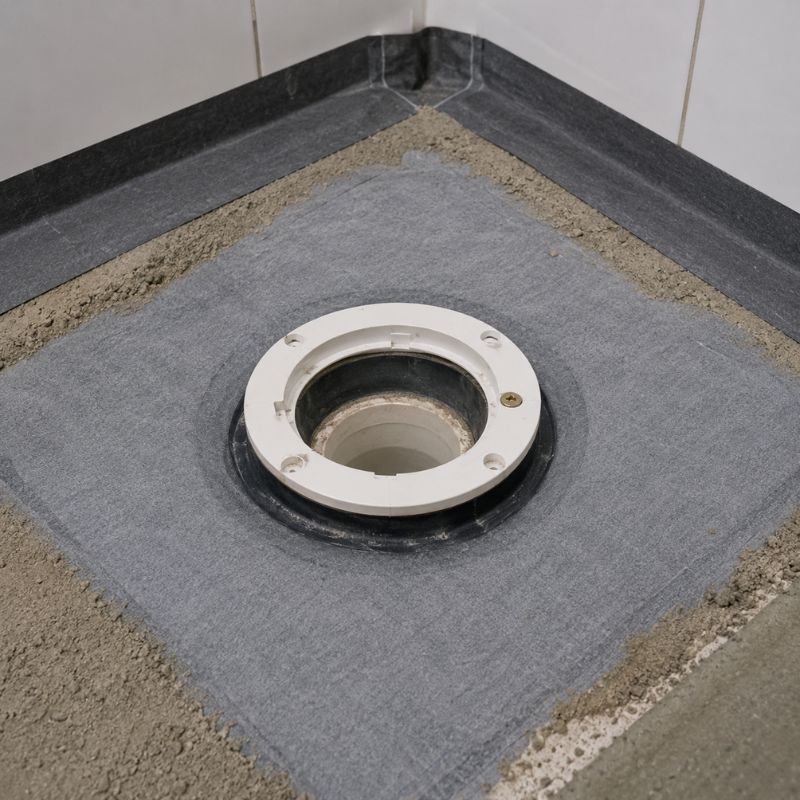
Apartment bases sit on a concrete slab with a topping, so a membrane replacement means stripping back, resealing the waste and the junctions, and rebuilding the fall. Tight rooms, no subfloor and a strict curing window. We stage it so the bathroom is out of use for the shortest run possible.
Shower Sealing and Caulking Sydney CBD
Frameless screens are everywhere in city apartments, and the joint at the glass, the tile and the base carries far more of the waterproofing load than most owners realise. We cut the old bead out, dry the joint, and reseal with a product that stays flexible as the building moves.
Tile Grouting Sydney CBD
High rise buildings move, and rigid grout in a small recess cracks along the same lines every time. We rake the failed joints out to depth and refill with a flexible grout rather than smearing new over old. On a newer apartment this is frequently the entire repair.
Tiling Services Sydney CBD
Apartment tiles are usually large format and unforgiving, and matching a discontinued line from a 2008 development is its own small research project. We check what the building has in storage first, because many schemes hold attic stock, then show you the alternatives before ordering.
Leaking Balcony Repairs Sydney CBD
Nearly every city apartment has one, and nearly every one drains through an outlet that silts up. Water then finds the door threshold or the perimeter junction and works inward. We clear and treat the drainage first, then deal with the junctions and the membrane.
Bathroom Renovations Sydney CBD
Where an apartment bathroom is at the end of its life and the shower is only the first thing to give way, we can take it from strip out to finished. Worth knowing that most schemes require approval for wet area works, and we will tell you what that involves before anything starts.
Five steps, because access is one of them
How a city job is sequenced
1
The report
Usually from the apartment below, or from building management. We take the detail from whoever has it.
2
Access arranged
Dock, lift, induction, hours. Booked before we come, so the first visit is not wasted.
3
Testing
Flood test, moisture map, thermal. Confirmed from below where we can get in.
4
Written cause and price
One document, forwardable to strata. Fixed figure, not a range.
Lot property, common property, and the argument between them
Where strata shower leak repairs get complicated
The difficult part of a strata shower leak is rarely the plumbing. It is working out whether the failure sits in the lot or in the common property, because that determines who pays. Waterproofing membranes in particular sit awkwardly, since they were installed by the original builder yet live inside your bathroom.
We do not adjudicate that, and anyone who tells you they can is overreaching. What we can do is establish the fact base. Which fixture is leaking, whether the membrane has failed, whether the water is coming from the shower at all or from a pipe in the wall, and where it is exiting. Put that in front of an owners corporation and the conversation usually resolves itself.
Development and building applications inside the local government area go through the City of Sydney, which matters if the repair grows into a renovation.
City questions we field weekly
Answers for apartment owners
It comes down to whether the failed element is lot property or common property, and that is a decision for the owners corporation rather than for us. Broadly, fixtures inside your apartment tend to sit with you, while the original waterproofing membrane and the building structure are more often treated as common property. It varies by scheme and by the by-laws. What settles it in practice is a written finding that names the failed element precisely, which is what we provide.
Usually yes. Newer apartments almost always have a membrane, so the failure is more often at the screen junction, the grout or the waste seal, and all three are repairable in place. Full membrane replacement is the exception in modern stock and the norm in converted or older buildings. We flood test before we quote so you know which one you are facing rather than committing blind.
It depends on the work. Anything touching the pipework or the drainage is licensed plumbing work. Resealing, regrouting, tiling and applying a waterproof membrane are trade areas with their own requirements, and waterproofing in particular carries certification obligations when a new membrane goes in. Ask any contractor which category your job falls into and what they are licensed to do. It is a fair question, and anyone worth using will answer it without getting defensive.
Faster than most people expect. On a concrete slab there is nothing absorbent to slow the water down, so it runs along the topping and reaches the ceiling below in days rather than months. The first sign is usually a small stain around a downlight, because the cutout is the lowest point the water can find. If a neighbour has reported staining, stop using the shower and ring someone the same week.
For the works themselves, minor repairs inside your own bathroom generally do not need approval, though anything altering the waterproofing may. For access you almost certainly do. Most city buildings require a booked loading dock, a service lift slot, a certificate of currency from the contractor and work inside set hours. We arrange all of that as part of the job rather than leaving it with you.
The city and the villages around it
The city blocks we cover
The whole local government area. Linked suburbs have a page of their own, the rest are serviced without one. North Sydney sits across the bridge and has its own page.
Leaking Shower Repairs Alexandria
Leaking Shower Repairs Beaconsfield
Leaking Shower Repairs Camperdown
Leaking Shower Repairs Darlington
Leaking Shower Repairs Elizabeth Bay
Leaking Shower Repairs Eveleigh
Leaking Shower Repairs Forest Lodge
Leaking Shower Repairs Moore Park
Leaking Shower Repairs Paddington
Leaking Shower Repairs Potts Point
Leaking Shower Repairs Redfern
Leaking Shower Repairs Rosebery
Leaking Shower Repairs Rushcutters Bay
Leaking Shower Repairs Surry Hills
Leaking Shower Repairs The Rocks
Leaking Shower Repairs Ultimo
Leaking Shower Repairs Woolloomooloo
Leaking Shower Repairs Zetland
Leaking Shower Repairs Barangaroo
Leaking Shower Repairs Chippendale
Leaking Shower Repairs Darlinghurst
Leaking Shower Repairs Dawes Point
Leaking Shower Repairs Erskineville
Leaking Shower Repairs Glebe
Leaking Shower Repairs Haymarket
Leaking Shower Repairs Millers Point
Leaking Shower Repairs Pyrmont
Leaking Shower Repairs Waterloo
Leak Detection Alexandria
Leak Detection Barangaroo
Leak Detection Beaconsfield
Leak Detection Camperdown
Leak Detection Chippendale
Leak Detection Darlinghurst
Leak Detection Darlington
Leak Detection Dawes Point
Leak Detection Elizabeth Bay
Leak Detection Erskineville
Leak Detection Eveleigh
Leak Detection Forest Lodge
Leak Detection Glebe
Leak Detection Haymarket
Leak Detection Millers Point
Leak Detection Moore Park
Leak Detection Paddington
Leak Detection Potts Point
Leak Detection Pyrmont
Leak Detection Redfern
Leak Detection Rosebery
Leak Detection Rushcutters Bay
Leak Detection Surry Hills
Leak Detection The Rocks
Leak Detection Ultimo
Leak Detection Waterloo
Leak Detection Woolloomooloo
Leak Detection Zetland
Waterproofing Services Alexandria
Waterproofing Services Barangaroo
Waterproofing Services Beaconsfield
Waterproofing Services Camperdown
Waterproofing Services Chippendale
Waterproofing Services Darlinghurst
Waterproofing Services Darlington
Waterproofing Services Dawes Point
Waterproofing Services Elizabeth Bay
Waterproofing Services Erskineville
Waterproofing Services Eveleigh
Waterproofing Services Forest Lodge
Waterproofing Services Glebe
Waterproofing Services Haymarket
Waterproofing Services Millers Point
Waterproofing Services Moore Park
Waterproofing Services Paddington
Waterproofing Services Potts Point
Waterproofing Services Pyrmont
Waterproofing Services Redfern
Waterproofing Services Rosebery
Waterproofing Services Rushcutters Bay
Waterproofing Services Surry Hills
Waterproofing Services The Rocks
Waterproofing Services Ultimo
Waterproofing Services Waterloo
Waterproofing Services Woolloomooloo
Waterproofing Services Zetland
Solid chip: suburb page you can open / Dashed chip: serviced, no page yet
Drainage, stormwater and building approvals for this area sit with the City of Canterbury-Bankstown.
