

Office Amenities And Older Walk-Ups
Leaking Shower Repairs North Sydney
Two kinds of building, and both of them leak on somebody else’s schedule.
North Sydney runs an office core and a belt of older red brick flats around it, and the shower work splits neatly between them. Commercial amenities and end of trip facilities take a hammering and fail years before the fitout allowed for. The walk-ups through Neutral Bay, Cremorne and Cammeray are sixty years old with original bathrooms and, in plenty of cases, no membrane under the base at all.
Get a repair quote
Same failure, different building
Commercial amenities against a sixties walk-up
We work on both every week. What changes is everything around the repair.
Stage | Office amenities | 1960s walk-up unit |
How fast it fails | Years early, because of traffic volume | Slowly, over decades |
Who reports it | Facilities or the tenant on the floor below | The owner, or the neighbour |
When work can happen | Outside occupied hours, often overnight | Inside the building's permitted hours |
Access | Building management, induction, service lift | A key and a parking spot, usually |
Membrane | Present but undersized for the use | Frequently absent altogether |
What matters most | The floor back in service by morning | Not sealing a wet bed back in |
Commercial and residential, same crew
The full service list, North Sydney
Seven services, each linking to its full page. Leak detection leads because in a tenanted building the cost of a wrong guess lands on someone else.
Water Leak Detection North Sydney
Whether it is a tenanted office floor or a 1970s two bedder, the first job is establishing where the water is actually getting in. Plugged flood test, moisture mapping through the adjoining spaces, thermal across the slab, and confirmation from the level below where we can get access to it.
Shower Sealing and Caulking North Sydney
Walk-up units around Neutral Bay and Cammeray are running on sealant that was often last touched decades ago. We cut it out to the tile edge, dry the joint, then reseal in a neutral cure product. Harbourside buildings get the salt-tolerant specification, because Lavender Bay and Milsons Point sit right on the water.
Waterproofing North Sydney
Red brick walk-ups from the sixties and seventies frequently have screed on slab and nothing else. Commercial amenities are the opposite problem, membranes that exist but were never designed for the traffic they now carry. Both end in the same place, a stripped base, a corrected fall and a new membrane.
Tile Grouting North Sydney
Small mosaic floors in older units and heavy duty tiling in commercial amenities both fail at the joints first. We rake the failed lines out to depth and refill with a flexible grout. In an office bathroom that can often be staged overnight so the floor is back in use by morning.
Tiling Services North Sydney
Original tiles in a sixties unit rarely survive being lifted, so we salvage what we can and show you the closest current match before ordering. In commercial work we match to the building’s specification rather than guessing, because facilities managers hold records more often than owners do.
Leaking Balcony Repairs North Sydney
Harbourside blocks were built to face the view, which means a tiled balcony over habitable space on nearly every level. Salt, sun and constant movement crack the junctions and silt up the outlets. We treat the drainage and the perimeter before anyone starts talking membranes.
Four steps, scheduled around you
How we run it
1
Tell us the constraints
Occupied hours, permitted noise windows, who controls access. We plan around them.
2
We test in place
Flood test, moisture map, thermal. Confirmed from below where access allows.
3
Written cause, fixed price
One page, forwardable to a facilities team or an owners corporation.
4
Repair, re-test, hand back
Work inside the agreed window, tested again, area left clean and in service.
Docks, inductions and permitted hours
Getting access is the part that derails jobs
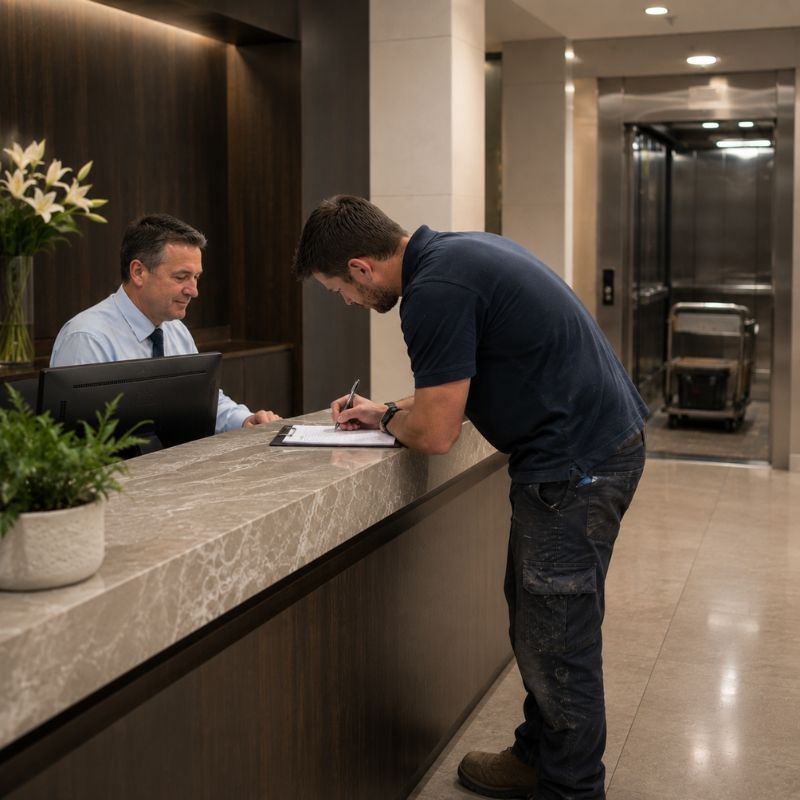
Commercial buildings do not simply let a trade van pull up. There is a dock booking, a service lift slot, a site induction, a swipe, and a certificate of currency that has to be lodged before anyone gets past the lobby. Residential buildings are lighter but set their own permitted hours, and going outside them costs you goodwill you may need later.
We treat all of that as part of the job rather than an obstacle discovered on the morning. If a building needs paperwork, we lodge it. If noisy work has to sit between 8am and 5pm, or after 6pm, we sequence the wet trades to suit. If the amenities have to be back in service by the time staff arrive, that dictates when the sealant goes down, and we plan backwards from it.
The reason this matters is simple. A wasted first visit on a city fringe job is not just a lost morning, it is another week before the building can fit you back in.
What we arrange before arriving

Straight numbers, nothing dressed up
Sixty year old bathrooms, original everything
What we find inside the walk-ups
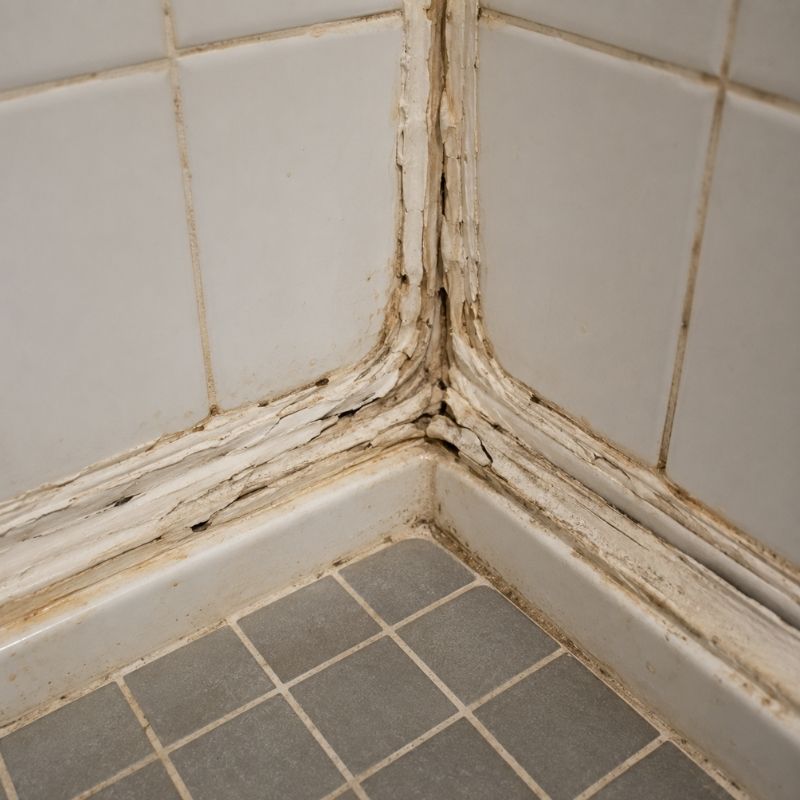
The red brick blocks through Neutral Bay, Cremorne, Cammeray and Wollstonecraft were built quickly and built well, and a lot of them still have the bathroom they were finished with. Small mosaic floor, tiled to shoulder height, a screed bed laid straight onto the slab, and a bead of silicone at the corners that somebody has been renewing on top of itself for forty years.
That last habit is what causes most of the callouts. Each new bead traps whatever was underneath, and eventually the joint is more layers than seal. Water gets behind it, soaks the bed, and appears in the flat next door because the wall is shared.
None of that is a disaster. It just means the honest repair is to cut everything back to bare tile, let the bed dry properly, and start again. Anyone offering to run a fresh bead over the top on the same visit is selling you the next callout.
Asked by owners and facilities teams
Four practical answers
Yes, and it is a normal part of what we do. Commercial amenities and end of trip facilities take far more traffic than a home bathroom, so grout and sealant fail years earlier than the fitout allowed for. The constraints are different rather than harder. Work usually has to happen outside occupied hours, access runs through building management, and the floor needs to be back in service by the time people arrive. Our Monday to Saturday hours from 6:30AM to 11PM are built around exactly that.
Less than most people expect for a reseal and regrout, which is usually a single day with the shower back in use after the sealant cures. A membrane replacement is a genuine disruption, several days with the bathroom out of service, and there is no honest way to dress that up. What we can control is the mess and the sequencing. Protection goes down through the common areas, work is staged to keep the room usable for as long as possible, and you get a firm answer on dates rather than a rolling estimate.
First by finding out whether there is a membrane under the base at all, because in that era there frequently is not. A timed flood test answers it. If the base holds water, the failure is above the membrane and we repair the joints, the grout and the screen with the tiles left in place. If it does not hold, the base gets stripped, the fall reset and a new membrane laid before re-tiling. Older blocks also tend to have shared walls and neighbours, so we test from the dry side before assuming anything.
For commercial work, usually yes, and it is often the only sensible way to do it. We are on the tools Monday to Saturday from 6:30AM through to 11PM, which covers most building noise windows at either end of the day. For residential buildings, the owners corporation normally sets the permitted hours and we work inside them. Tell us the building’s restrictions when you call and we will schedule around them rather than discovering them on the day.
Lower north shore, harbour side
Suburbs on this hub
The council area and the pockets around it. Linked suburbs have their own page, the rest we service without one.
Leak Detection Cremorne
Leak Detection Cammeray
Leak Detection Cremorne Point
Leak Detection Crows Nest
Leak Detection Kirribilli
Leak Detection Kurraba Point
Leak Detection Lavender Bay
Leak Detection Mcmahons Point
Leak Detection Milsons Point
Leak Detection Neutral Bay
Leak Detection St Leonards
Leak Detection Waverton
Leak Detection Wollstonecraft
Leaking Shower Repairs Neutral Bay
Leaking Shower Repairs Wollstonecraft
Leaking Shower Repairs Crows Nest
Leaking Shower Repairs Kirribilli
Leaking Shower Repairs Kurraba Point
Leaking Shower Repairs Mcmahons Point
Leaking Shower Repairs St Leonards
Leaking Shower Repairs Waverton
Waterproofing Services Cammeray
Waterproofing Services Cremorne
Waterproofing Services Cremorne Point
Waterproofing Services Crows Nest
Waterproofing Services Kirribilli
Waterproofing Services Kurraba Point
Waterproofing Services Lavender Bay
Waterproofing Services Mcmahons Point
Waterproofing Services Milsons Point
Waterproofing Services Neutral Bay
Waterproofing Services St Leonards
Waterproofing Services Waverton
Waterproofing Services Wollstonecraft
Building approvals and floodplain development controls for this area are published by Hawkesbury City Council, and current river and flood information is available from the NSW State Emergency Service.
