

Period Bathrooms Under Big Trees
Leaking Shower Repairs Ku Ring Gai
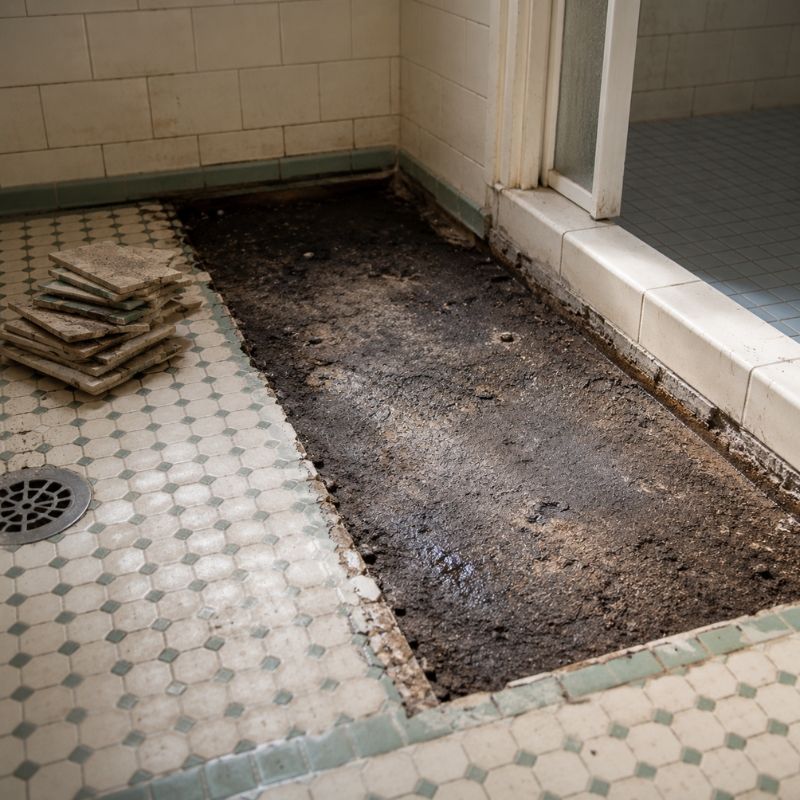
Most of these houses were finished before waterproof membranes were a thing anyone specified.
The upper north shore is large interwar and Federation homes on generous blocks, and a good number of them still have a bathroom that has been re-tiled once and never properly rebuilt. Underneath the tiles there is often nothing but bed. Then there are the mature trees, which are part of why people live here and also why the ground under these houses keeps moving.
Get a repair quote
What is under the tiles, and what is not
Bathrooms built before the rules existed
A 1930s bathroom in Killara or Wahroonga was built to a standard that made sense at the time. Screed on the floor, tiles bedded into it, and a reliance on the tiling itself to keep water where it belonged. Waterproof membranes as we understand them now were simply not part of the job.
Most of those bathrooms have since been re-tiled at least once, and that is where the trouble usually comes from. A re-tile over the original bed looks like a renovation and behaves like a repaint. The bed underneath is unchanged, still holding whatever it absorbed over the previous fifty years, and still without anything to stop water passing through it.
None of this is a reason to panic about an old house. It is a reason to test before assuming, because the difference between a joint repair and a full rebuild is entirely about what is under the bed, and you cannot see it from above.
What we look at in a period home

Old house, several suspects
Not everything wet is the shower
Period homes come with their own catalogue of damp, and telling them apart saves real money.
What you are seeing | Could be the shower | Could be the house |
Damp on the wall behind the recess | Water tracking through the bed | Old rendered brick holding moisture |
Tide line at a consistent height | Unlikely | Long standing damp in the masonry |
Wet joists directly under the wet area | Very likely | Unlikely to be that localised |
Damp that eases after 48 hours unused | Almost certainly | No, it would not change |
Cracks running through several rooms | No | Ground movement, often tree related |
Musty smell with no visible mark | Possible, and early | Possible, and worth testing either way |
Seven services, old houses included
What we take on across Ku Ring Gai
Each service links through to its own page. Waterproofing leads here, because on this housing stock it is the answer more often than anywhere else in Sydney.
Waterproofing Ku Ring Gai
Bathrooms in the big interwar homes through Wahroonga, Killara and Pymble were frequently built before membranes existed, and many have only ever been re-tiled over the top. When the flood test confirms there is nothing under the bed, we strip it, reset the fall, seal the junctions and the waste, and lay a proper membrane.
Shower Sealing and Caulking Ku Ring Gai
Decades of silicone applied over the top of itself is the norm in a period bathroom. It has to come out completely rather than get another layer. Joint cut back to bare tile, dried, then resealed in a neutral cure product that can take seasonal movement.
Tiling Services Ku Ring Gai
Matching an original upper north shore tile is often genuinely impossible, and we will tell you that rather than promise otherwise. Where originals survive removal we reuse them, and where they do not we show you the closest current option in the room itself before anything is ordered.
Bathroom Renovations Ku Ring Gai
On a home that is individually listed or sits in a conservation area, an internal bathroom rebuild is usually straightforward while anything structural or external is not. We can take the room from strip out to finished, and we will flag early if a job looks like it needs approval.
Roots, footings and the ground below
Why the grout keeps opening in the same corner
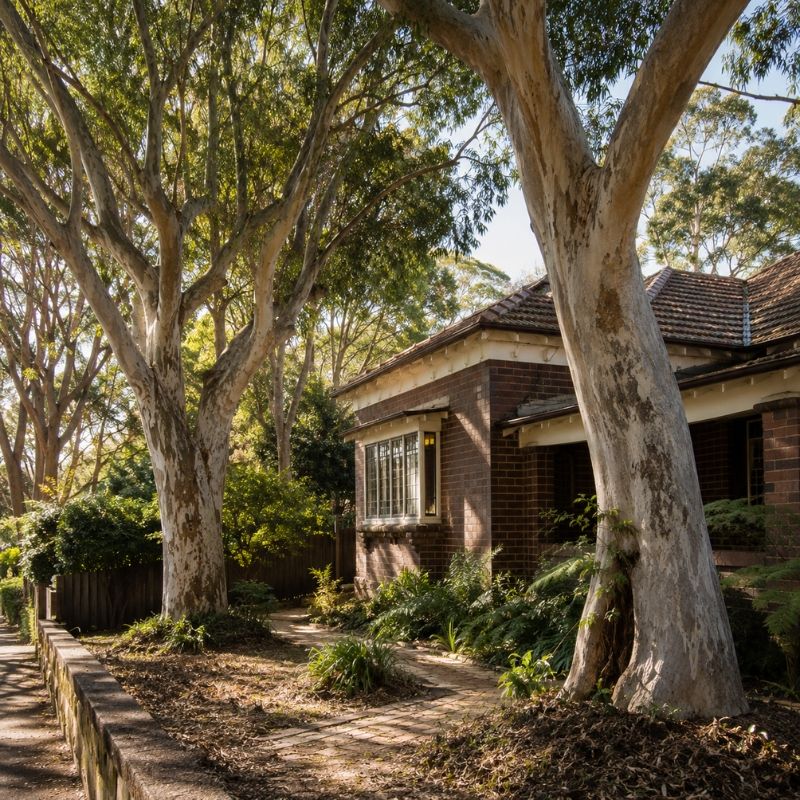
The trees are the reason a lot of people live up here, and they are also a quiet structural influence on every house near them. A mature eucalypt draws an enormous volume of water out of the soil through a dry spell, and clay soil that loses moisture shrinks. It does not shrink evenly, because the roots are not spread evenly.
What that produces is slow, uneven movement in footings and slabs. Tiling has no capacity to absorb it and cement grout has less. So a joint opens, closes a little through a wet winter, then opens further the next summer. Owners understandably read it as poor workmanship.
The practical response is not to fight it. Flexible grout in the floor joints, neutral cure silicone where the joint has to move, and a realistic expectation that a house sitting in a mature garden will keep moving for as long as the garden is there.
Four steps, with a wait built in
How we work on an older home
1
You tell us the history
Age of the bathroom, whether it has been re-tiled, and what the damp is doing.
2
Test, then let it sit
Flood test and readings, then 48 hours unused and readings again. Old houses need the second visit.
3
Findings and cost, in writing
What is leaking, what is simply old, and what each costs to put right.
4
Repair and re-check
Work completed, flood tested again, subfloor rechecked before we finish.
Roseville through to Wahroonga
Where we work on the upper north shore
The council area, station suburbs and leafy streets alike. Linked suburbs have their own page, the rest we service without one. Note that Mount Kuring-Gai sits in Hornsby Shire rather than here, despite the similar name.
Leak Detection Gordon
Leak Detection Killara
Leak Detection Lindfield
Leak Detection Pymble
Leak Detection Roseville
Leak Detection Roseville Chase
Leak Detection St Ives
Leak Detection St Ives Chase
Leak Detection Turramurra
Leak Detection Wahroonga
Leak Detection Warrawee
Waterproofing Services Gordon
Waterproofing Services Killara
Waterproofing Services Lindfield
Waterproofing Services Pymble
Waterproofing Services Roseville
Waterproofing Services Roseville Chase
Waterproofing Services St Ives
Waterproofing Services St Ives Chase
Waterproofing Services Turramurra
Waterproofing Services Wahroonga
Waterproofing Services Warrawee
Heritage listings, conservation areas and tree preservation controls for this council are published by Ku-ring-gai Council. Bushfire prone land mapping matters on the bushland fringe at St Ives Chase and Wahroonga and is available from the NSW Rural Fire Service.
Asked about older houses
Four things worth knowing
Almost never for the repair itself. Resealing, regrouting and replacing a failed membrane are internal wet area works, and even on an individually listed house they generally sit outside what the listing is protecting. Where it does start to matter is anything structural, anything visible from the street, or work that changes the original fabric of the building in a meaningful way. If your repair heads in that direction we will say so early so you can check before committing, rather than finding out midway.
By not lifting them unless the test says we have to. If the membrane below is sound and water is entering at the joints, the grout or the screen, everything happens in the recess and the original tiling stays exactly where it is. Where tiles genuinely must come up, we lift slowly and expect to lose some, because period tiles are brittle and were often bedded hard. We will tell you upfront what the realistic salvage rate looks like rather than promising all of them back.
Not directly, but they can absolutely start the chain. Mature trees draw a great deal of moisture out of the soil, and around the upper north shore there are a lot of very established root systems close to houses. As the soil dries and shrinks unevenly, footings and slabs shift, and that movement transfers into rigid tiling and grout. The grout cracks, water gets into the bed, and the shower starts leaking. The tree did not leak. It moved the ground that the shower was sitting on.
It depends almost entirely on one question, which is whether the membrane is intact. A reseal and regrout on a sound base is at the light end and usually a single day. A full strip out, new membrane and re-tile in a period bathroom is a different scale of work, partly because of the tiling and partly because old houses tend to reveal something once you open them. We flood test first, then give you one fixed price in writing rather than an hourly rate that drifts.
