

Bay Foreshore And Tower Bathrooms
Leaking Shower Repairs Bayside
Two completely different bathrooms sit inside one council area here, and they fail for opposite reasons.
Down along the foreshore at Monterey, Sandringham and Dolls Point the enemy is salt, and it goes after the sealant and the screen fixings long before the tiles. Up at Wolli Creek and Mascot the buildings are barely fifteen years old, and what fails there is construction silicone that hardened early and floor grout that shrank. Same wet patch, two entirely different repairs.
Get a repair quote
Straight figures
From the foreshore to the flight path
Every service we run in Bayside
Seven services, each linking through to its full page. The person who tests your bathroom is the person who repairs it.
Shower Sealing and Caulking Bayside
Bay-facing bathrooms chew through sealant. We cut the failed bead out to the tile edge, dry the joint, then run a neutral cure silicone rated for salt exposure. Along the foreshore at Dolls Point and Sandringham that specification is the whole difference between a repair that holds and one you ring us about again next summer.
Waterproofing Bayside
Older Rockdale and Bexley bathrooms often have screed straight onto slab with nothing between. Newer Wolli Creek and Mascot units have a membrane, but a thin one that was rushed. Either way, when the flood test proves it has gone we strip back, reset the fall, seal the waste flange and lay a new one.
Tile Grouting Bayside
Salt-laden air turns grout chalky faster than it should, and floor joints are the first to go. We rake the failed lines out to depth and refill with a flexible grout. On a ten year old apartment that is very often the entire job, no strip out required.
Sand, salt and a high water table
What the ground here does to a bathroom
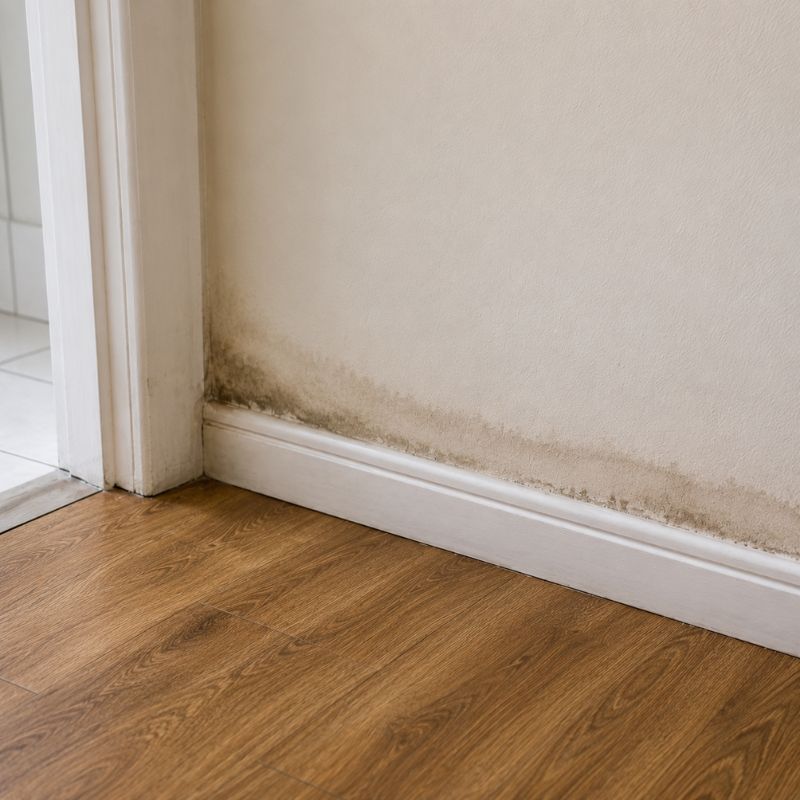
Bayside sits low. Much of it is sand and reclaimed ground between Botany Bay and the Cooks River, and the water table is closer to the surface than almost anywhere else we work. That matters because damp at floor level does not automatically mean the shower.
Older slabs through Arncliffe, Banksia and Turrella were poured before damp proofing was taken seriously, and they wick. You get a dark band along the bottom of a wall that looks exactly like a leak from the recess on the other side. Cutting into the shower to chase it wastes a day and fixes nothing.
So we test the wet area first and prove whether it is holding water. If it is, we repair it. If it is not, we say so and you have saved yourself a bathroom strip out.
How we separate the two

Two building types, two failure modes
Old brick against new tower
The council area splits cleanly in two, and so does the work.
What we find | Foreshore and older brick | Wolli Creek and Mascot towers |
Typical age | 1950s to 1970s | Built in the last fifteen years |
Usual failure | Screed bed with no membrane under it | Construction silicone hardening early |
What the salt does | Attacks screen tracks and sealant | Less exposed, but balconies still cop it |
Floor structure | Slab or timber, varies by street | Concrete slab with a topping |
Most common repair | Strip, new membrane, re-tile | Reseal and regrout, tiles left alone |
Who reports it first | The owner | The neighbour downstairs |
Four steps, no surprises
How we run a Bayside job
1
Tell us what you see
Where the damp is, how long, and whether it worsens after a shower. That answer narrows it fast.
2
We test
Flood test, moisture readings, screen and outlet check. About an hour on site.
3
Fixed price in writing
Scope and cost before anything is cut. If a regrout will hold it, that is what we quote.
4
Fix it, then test again
Work done, then flood tested again before we leave.
Four steps, no surprises
How we run a Bayside job
The council area and the pockets around it. Linked suburbs have their own page, the rest we service without one.
Leak Detection Arncliffe
Leak Detection Banksia
Leak Detection Banksmeadow
Leak Detection Bardwell Park
Leak Detection Bexley
Leak Detection Botany
Leak Detection Daceyville
Leak Detection Dolls Point
Leak Detection Eastgardens
Leak Detection Eastlakes
Leak Detection Hillsdale
Leak Detection Kyeemagh
Leak Detection Mascot
Leak Detection Monterey
Leak Detection Pagewood
Leak Detection Ramsgate
Leak Detection Ramsgate Beach
Leak Detection Ramsgate Beach
Leak Detection Rockdale
Leak Detection Sandringham
Leak Detection Sans Souci
Leak Detection Turrella
Leak Detection Wolli Creek
Leaking Shower Repairs Sans Souci
Leaking Shower Repairs Wolli Creek
Leaking Shower Repairs Eastlakes
Leaking Shower Repairs Hillsdale
Leaking Shower Repairs Turrella
Waterproofing Services Arncliffe
Waterproofing Services Banksia
Waterproofing Services Banksmeadow
Waterproofing Services Bardwell Park
Waterproofing Services Bexley
Waterproofing Services Botany
Waterproofing Services Daceyville
Waterproofing Services Dolls Point
Waterproofing Services Eastgardens
Waterproofing Services Hillsdale
Waterproofing Services Kyeemagh
Waterproofing Services Mascot
Waterproofing Services Monterey
Waterproofing Services Pagewood
Waterproofing Services Ramsgate
Waterproofing Services Ramsgate Beach
Waterproofing Services Rockdale
Waterproofing Services Sandringham
Waterproofing Services Sans Souci
Waterproofing Services Turrella
Waterproofing Services Wolli Creek
What the phone calls sound like
Questions worth answering properly
Carefully and in the right order. There is no subfloor to get under, so everything is read from above and from the apartment below, which makes accurate testing more important than anywhere else. Once the source is confirmed, most tower leaks turn out to be at the silicone joints or in shrunken floor grout rather than the membrane, and both are repaired with the tiles left in place. Access is the other half of the job, and we book the dock and the lift before we come.
It depends what is below. Over a slab, water tracks along the topping and comes out in the ceiling of whatever is downhill, often not the room directly under the shower. Over an undercroft garage, which is common on the sloping blocks down toward the river, it stains and eventually sags the ceiling lining. Over timber, it reaches the joists and that becomes a structural conversation rather than a tiling one.
No, and assuming it does is how people end up paying for a strip out they never needed. Water gets in through failed silicone, cracked or shrunken grout, a poorly sealed waste flange or a corroded screen track long before the membrane is the culprit. A flood test tells you which. If the base holds water, the membrane is doing its job and the problem is above it.
Sooner than most people do, but there is no need to panic. Water damage compounds quietly, so a small stain that has been there six months has usually been wet for a lot longer. If a neighbour below is reporting water, stop using the shower and get it tested that week. If it is a bit of dark grout and no damp anywhere else, you have time to get it looked at properly rather than accepting the first quote.
