

Shower Leak Specialists, Southern Sydney
Leaking Shower Repairs Sutherland Shire
We follow the water back to where it actually got in, then repair that. Not the stain on the ceiling.
A wet patch in the hallway carpet rarely starts where you can see it. In the Shire we spend a lot of time on 1970s brick veneer with sand-cement screed beds and no membrane, and on waterfront homes where the bathroom sits over a garage. Both hide the entry point well. So we test before we quote.
Get a repair quote
Four things Shire homeowners ring us about
The leak usually announces itself somewhere else
Showers rarely drip in a straight line. Water gets under the tile bed, runs along the fall of the slab or the bearers, and shows up in the next room. Here is what that looks like in practice.
Next room
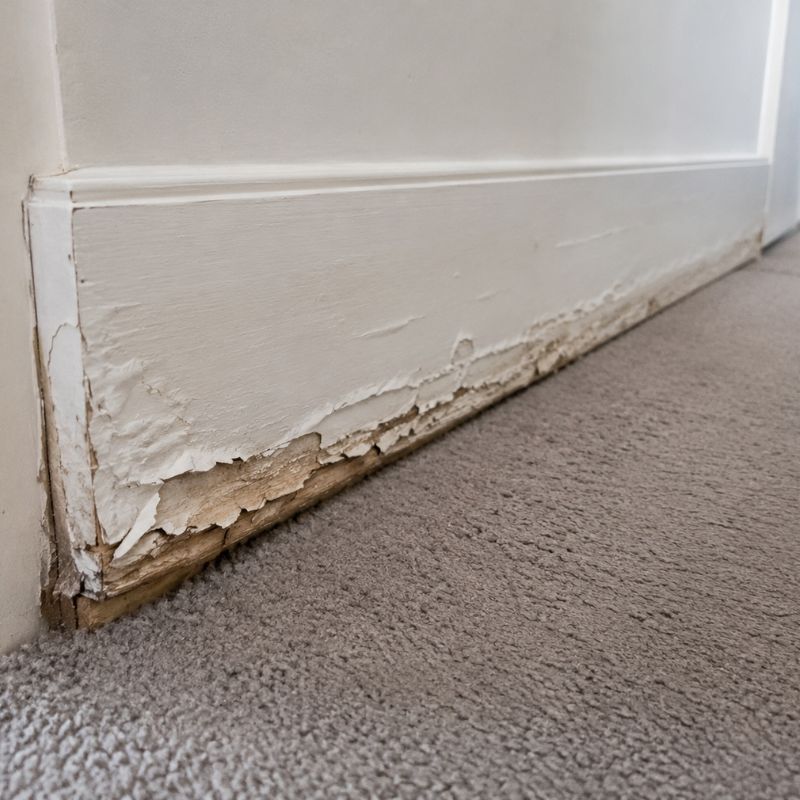
Skirting swelling in the hall
Paint bubbling at floor level on the far side of the shower wall. The tile bed is holding water and letting it out slowly.

Below
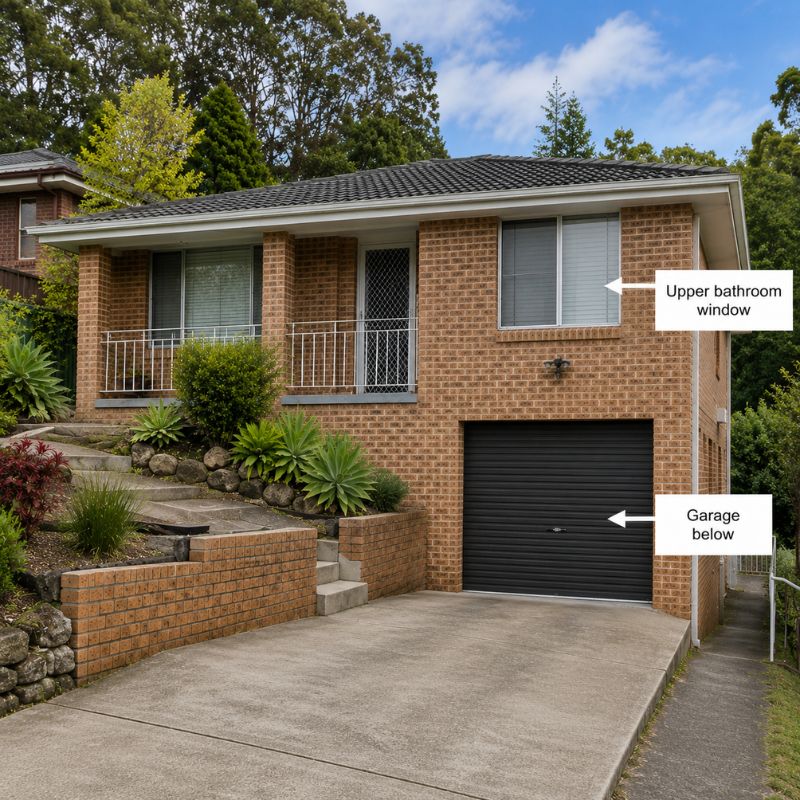
Damp on the garage ceiling
Common where the main bathroom sits over an integrated garage, which is most split-level homes through Bangor and Menai.
In the recess
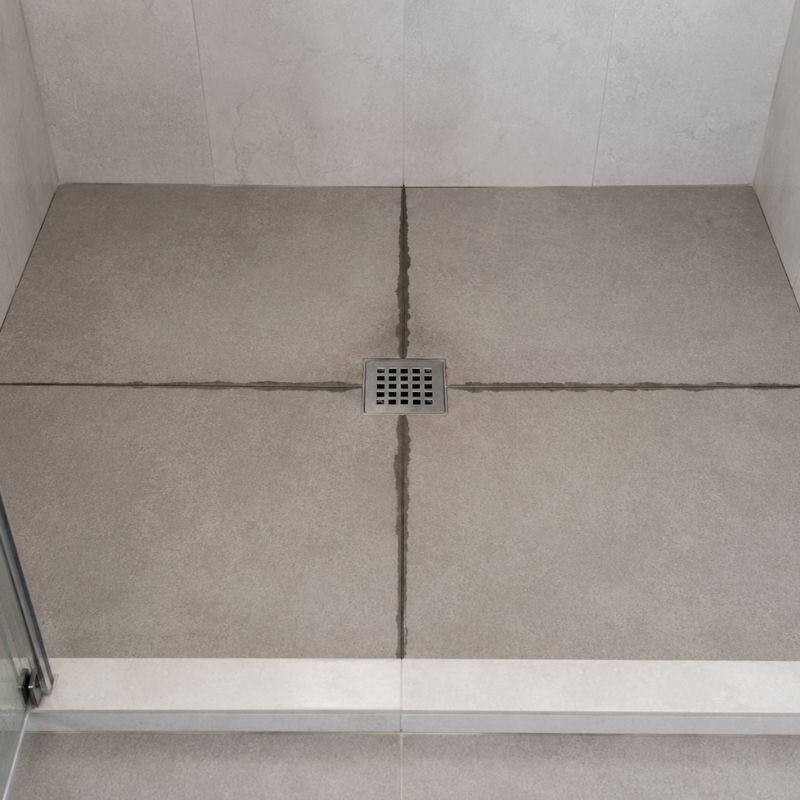
Grout that stays dark
Two days after anyone showered, the floor grout is still darker than the rest. The bed underneath has not dried out.

At the joint
Silicone lifting off the tile
Black at the edges, peeling at the corners. Near the water at Cronulla and Kurnell it perishes faster than it should.
Sandstone, salt and split levels
What the Shire itself does to a shower
Southern Sydney is not one job type. Down on the peninsula the air carries salt off Bate Bay, and it gets into the screen tracks and the sealant long before it touches the tile. Homes around Port Hacking and Lilli Pilli sit on sandstone with very little fall, so water that escapes the bed has nowhere quick to go.
Head inland and it changes again. Bangor, Barden Ridge and Menai are full of split-level builds on sloping blocks, where a first floor bathroom sits directly over living space. Miranda and Gymea run to solid 1960s and 70s brick veneer, and plenty of those bathrooms still have the original screed with no waterproof membrane under it at all. That is not a fault. It is simply what was built at the time.
Knowing which of those you are standing in changes the repair. Ring us and we will tell you what we usually find at your address.
What a Sutherland Shire inspection covers

Water restrictions and usage rules across southern Sydney sit with Sydney Water, which is worth a look if a leak has pushed your bill up.
Everything we do south of the Georges River
Our services across the Sutherland Shire
Seven jobs, all of them ours, all of them done by the same people who did the inspection. Each links through to the full service page.
Shower Sealing and Caulking Sutherland Shire
The joint between the wall and the base is where most Shire leaks start. We cut the old bead right out, clean the joint back to bare tile edge, and run a fresh neutral cure silicone. On peninsula homes we specify a grade that copes with salt-laden air, because the standard product gives up early near the water. Shower resealing Sutherland Shire homes usually takes a morning, and you are back in it the next day.
Waterproofing Sutherland Shire
Where the membrane has failed or was never there, we lay a new one. That means stripping the base, checking the fall to the waste, sealing the junctions and the waste flange, then re-tiling. It is the bigger job of the two, and on 1970s Miranda and Gymea bathrooms with a bare sand-cement bed it is often the only honest answer.
Water Leak Detection Sutherland Shire
Before anything gets pulled apart we find the path. Moisture meters through the adjoining wall, a timed flood test on the base, and thermal reading where the water is travelling under a slab. On waterfront blocks around Yowie Bay and Gymea Bay we check the subfloor as well, since ground damp gets blamed on the shower constantly.
Tile Grouting Sutherland Shire
Cracked, crumbling or missing grout lets water into the bed one shower at a time. We rake the old joints out properly rather than skim over them, then refill with a flexible grout that moves with the building. Shower regrouting Sutherland Shire jobs are the cheapest fix on this list, and on a young bathroom they are frequently enough.
Tiling Services Sutherland Shire
When tiles have to come up for the membrane, they go back down by us. We hold matching tiles aside where we can, and where a 1970s tile is long gone we will show you the closest current match before we commit. Straight, level, and set out so the cuts land where nobody looks.
Leaking Balcony Repairs Sutherland Shire
Plenty of Shire homes have a tiled balcony or a deck over habitable space, especially the ones built to catch a water view. Same principle as a shower, larger area, more movement and full weather exposure. We treat the junctions and the drainage outlets as the first suspects.
Bathroom Renovations Sutherland Shire
Sometimes the shower is the last thing holding a tired bathroom together and a repair is throwing good money after bad. If that is where you have landed we will say so, and we can take the room from strip out to finished, membrane and all.
Four visits at most, usually two
How a repair actually runs
1
You describe it
Phone or the form. What you can see, where, and how long it has been going on. We will already have a theory.
2
We test on site
Flood test, moisture readings, screen and hob check. Roughly an hour. You get the finding in plain words.
3
Fixed price, in writing
Scope and cost before anything is cut. If a reseal will do it we say so rather than quoting a strip out.
4
Repair and re-test
We do the work, then flood test it again before we pack up. You watch that part if you want to.
Worth knowing before you accept any quote
A proper repair against a patch job
Shower repairs Sutherland Shire wide get quoted at wildly different numbers, and the gap is almost always in what is left out. Here is the difference in practice.
Stage | What we do | What a patch job leaves behind |
Finding the leak | Flood test plus moisture readings on both sides of the wall | A look in the recess and a guess at the grout |
Old sealant | Cut out completely, joint cleaned back to bare tile edge | New silicone run straight over the failed bead |
The bed underneath | Checked for saturation and given time to dry | Sealed in wet, so the mould comes back within months |
Fall to the waste | Measured, and corrected if water is ponding | Ignored, which is why it leaks again at the same corner |
Proof it worked | Re-tested before we leave | You find out next winter |
26 suburb pages, one crew
Where we work in the Shire
We cover the whole council area, from the Woronora River across to the Cronulla area and down past Kurnell. Suburbs with their own page are linked. The rest we still service, we just have not written them up yet.
Leaking Shower Repairs Alfords Point
Leaking Shower Repairs Bangor
Leaking Shower Repairs Barden Ridge
Leaking Shower Repairs Bonnet Bay
Leaking Shower Repairs Caringbah
Leaking Shower Repairs Como
Leaking Shower Repairs Cronulla
Leaking Shower Repairs Engadine
Leaking Shower Repairs Grays Point
Leaking Shower Repairs Greenhills Beach
Leaking Shower Repairs Gymea
Leaking Shower Repairs Jannali
Leaking Shower Repairs Kirrawee
Leaking Shower Repairs Kurnell
Leaking Shower Repairs Lilli Pilli
Leaking Shower Repairs Lucas Heights
Leaking Shower Repairs Menai
Leaking Shower Repairs Miranda
Leaking Shower Repairs Oyster Bay
Leaking Shower Repairs Sandy Point
Leaking Shower Repairs Sutherland
Leaking Shower Repairs Sylvania
Leaking Shower Repairs Sylvania Waters
Leaking Shower Repairs Woolooware
Leaking Shower Repairs Woronora
Leaking Shower Repairs Yowie Bay
Leaking Shower Repairs Burraneer
Leaking Shower Repairs Dolans Bay
Leaking Shower Repairs Gymea Bay
Leaking Shower Repairs Heathcote
Leaking Shower Repairs Illawong
Leaking Shower Repairs Kangaroo Point
Leaking Shower Repairs Kareela
Leaking Shower Repairs Loftus
Leaking Shower Repairs Port Hacking
Leaking Shower Repairs Taren Point
Leaking Shower Repairs Woronora Heights
Leaking Shower Repairs Yarrawarrah
Leak Detection Alfords Point
Leak Detection Bangor
Leak Detection Barden Ridge
Leak Detection Bonnet Bay
Leak Detection Burraneer
Leak Detection Caringbah
Leak Detection Como
Leak Detection Cronulla
Leak Detection Dolans Bay
Leak Detection Engadine
Leak Detection Grays Point
Leak Detection Greenhills Beach
Leak Detection Gymea
Leak Detection Gymea Bay
Leak Detection Heathcote
Leak Detection Illawong
Leak Detection Jannali
Leak Detection Kangaroo Point
Leak Detection Kareela
Leak Detection Kirrawee
Leak Detection Kurnell
Leak Detection Lilli Pilli
Leak Detection Loftus
Leak Detection Lucas Heights
Leak Detection Menai
Leak Detection Miranda
Leak Detection Oyster Bay
Leak Detection Port Hacking
Leak Detection Sandy Point
Leak Detection Sutherland
Leak Detection Sylvania
Leak Detection Sylvania Waters
Leak Detection Taren Point
Leak Detection Woolooware
Leak Detection Woronora
Leak Detection Woronora Heights
Leak Detection Yarrawarrah
Leak Detection Yowie Bay
Waterproofing Services Alfords Point
Waterproofing Services Bangor
Waterproofing Services Barden Ridge
Waterproofing Services Bonnet Bay
Waterproofing Services Burraneer
Waterproofing Services Caringbah
Waterproofing Services Como
Waterproofing Services Cronulla
Waterproofing Services Dolans Bay
Waterproofing Services Engadine
Waterproofing Services Grays Point
Waterproofing Services Greenhills Beach
Waterproofing Services Gymea
Waterproofing Services Gymea Bay
Waterproofing Services Heathcote
Waterproofing Services Illawong
Waterproofing Services Jannali
Waterproofing Services Kangaroo Point
Waterproofing Services Kareela
Waterproofing Services Kirrawee
Waterproofing Services Kurnell
Waterproofing Services Lilli Pilli
Waterproofing Services Loftus
Waterproofing Services Lucas Heights
Waterproofing Services Menai
Waterproofing Services Miranda
Waterproofing Services Oyster Bay
Waterproofing Services Port Hacking
Waterproofing Services Sandy Point
Waterproofing Services Sutherland
Waterproofing Services Sylvania
Waterproofing Services Sylvania Waters
Waterproofing Services Taren Point
Waterproofing Services Woolooware
Waterproofing Services Woronora
Waterproofing Services Woronora Heights
Waterproofing Services Yarrawarrah
Waterproofing Services Yowie Bay
Solid chip: suburb page you can openDashed chip: serviced, no page yet
Sewer, stormwater and drainage approvals in this area run through Sutherland Shire Council, and consumer protections for building work sit with NSW Fair Trading.
Straight numbers, nothing dressed up
The questions we get on the phone
Answers before you book
Often no. If the membrane under the base is still sound and the water is getting in at the joints or the grout, we can repair it with the tiles left in place. Tiles come up when the membrane has failed or was never installed, which we confirm with a flood test first. We will tell you which one you have before we quote, not after.
Most reseals are done in a morning. Allow 24 hours before the shower goes back into use so the silicone cures properly, and a bit longer in a cold, closed up bathroom in July. A regrout usually runs the same day. A membrane replacement is a different scale of job, typically several days with tiling and drying time built in.
It depends on whether it is a joint problem or a membrane problem, and the two sit a long way apart in price. A reseal and regrout is at the light end. A full strip out, new membrane and re-tile is the heavy end. We inspect, flood test, then give you one fixed price in writing. No hourly rate creeping upward while you watch.
Because water is getting under the tiles and travelling. It enters at a failed joint, a cracked grout line or a hole in the membrane, soaks into the screed bed, then follows the fall until it finds an exit, which is often the far side of the wall. That is why the damp patch and the actual fault are rarely in the same place, and why we test rather than guess.
