
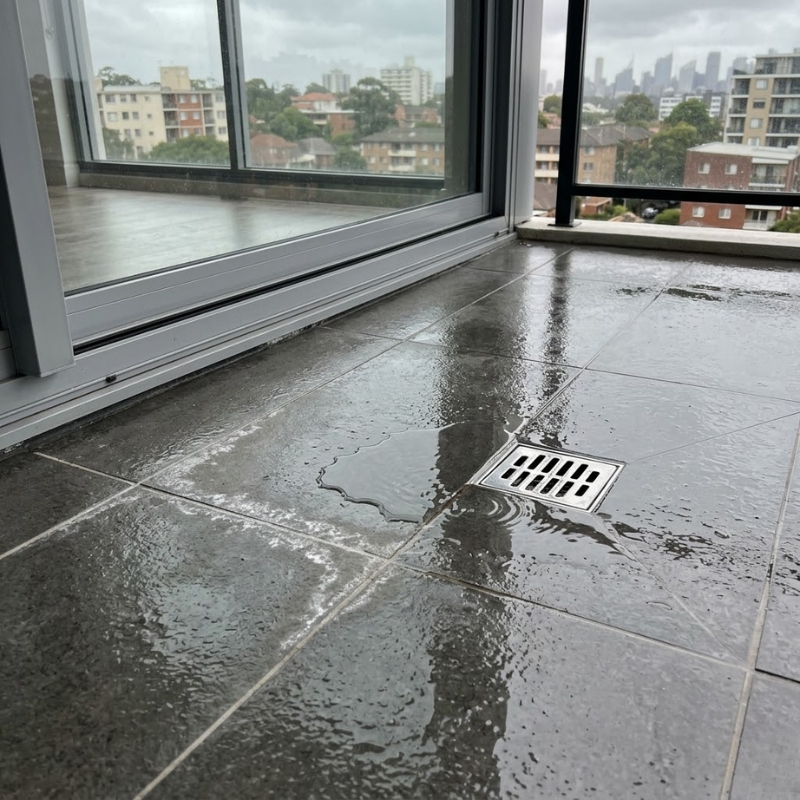
Balcony leaks rarely start with a dramatic drip through the ceiling. More often, they begin quietly: a patch of white powder on grout, water that lingers too long after rain, a hairline crack that slowly widens, or a sliding door track that keeps looking “wet” even on fine days.
In Sydney, balconies take a beating. Coastal air can accelerate corrosion, East Coast low events can dump heavy rain quickly, and apartment balconies often have complex build-ups (tiles over screed, outlets, thresholds, balustrade fixings) where tiny defects can let water migrate into the slab or wall system.
This guide focuses on early warning signs you can spot before water shows up indoors, plus what each sign usually means and what to check next—without turning your balcony into a demolition project.
Why balcony waterproofing failures are often hard to notice early
A balcony is an exposed wet area. When waterproofing is performed properly, water drains away, evaporates, and doesn’t enter the structure. When it’s failing, moisture can:
• Track under tiles and along screeds
• Travel toward the doorway (especially if drainage falls are poor)
• Reach balustrade penetrations and edge details
• Enter hairline cracks and corrode reinforcing steel over time
• Appear internally only after the substrate is already saturated
That’s why “no visible leaks inside” isn’t a reliable indicator that everything is fine.
Quick reality check
If you’re seeing multiple early signs at once (ponding + efflorescence + cracking + persistent damp near the door), it’s usually not just a cosmetic issue.
The high-risk zones where failures start first
Before you hunt for symptoms, know where to look. Most balcony waterproofing problems show up in these areas:
• Door threshold and sliding door track (water pooling, failed seals, insufficient step-downs)
• Drain outlets and scuppers (blockages, undersized outlets, inadequate falls)
• Balcony edges and drip lines (edge flashing issues, capillary water tracking back)
• Movement joints (missing/failed joints let cracks form through tiles/screed)
• Balustrade posts and fixings (penetrations through waterproofing are common failure points)
• Corners and upturns (weak detailing where waterproofing should turn up walls/returns)
You don’t need to be a builder to inspect these areas—you just need a structured approach.
A simple inspection kit (no special tools required)
You can do most checks with:
• Torch (phone torch is fine)
• Dry paper towel or tissue
• Masking tape + pen (mark stains/crack ends and date them)
• A straight edge (or a spirit level if you have one)
• Bucket/jug of water for controlled pours
• Optional: a basic moisture meter (helpful for inside skirtings near the balcony door)
If you’re in an apartment, keep inspections non-invasive. Avoid “flooding” tests that could impact neighbours or strata property.
Early sign 1: Ponding water that lasts too long after rain
Ponding water (water sitting on the balcony surface) is one of the clearest early warnings because it increases exposure time. Even good waterproofing systems are under more stress when water doesn’t drain promptly.
What to look for
• Puddles that remain hours after rain
• Wet patches that stay dark long after surrounding tiles dry
• “Ring marks” where water consistently sits in the same spots
• Water pooling against the door threshold or wall returns
What it usually means
• Insufficient fall to the outlet (or falls that have changed over time)
• Outlet partially blocked or undersized for rainfall intensity
• Tile/screed settlement creating low points
• Door threshold acting like a dam rather than a protected transition
Safe next check
After rain, take a photo from the same angle each time and note the time. If water repeatedly remains in the same low spot after similar rainfall, it’s a pattern—not a one-off.
Q&A: How long is “too long” for water to remain on a balcony?
There’s no single perfect number because weather, shade, and surface type vary. The bigger issue is repeated standing water in the same location and water that sits long enough to keep grout and joints damp for extended periods. Recurring ponding near the doorway is especially concerning.
Early sign 2: Efflorescence (white powdery deposits)
That chalky white residue on grout or tile edges is called efflorescence. It happens when water dissolves salts from cement-based materials and carries them to the surface as it evaporates.
What to look for
• White powder on grout lines, tile edges, or at the balcony perimeter
• Crusty build-up that returns soon after cleaning
• White staining that appears after rain cycles
What it usually means
Efflorescence doesn’t automatically prove waterproofing failure—but it strongly suggests moisture is moving through the substrate more than it should. If it’s recurring, water may be getting under tiles or into screeds.
Safe next check
Gently clean a small area, then monitor after the next few wet weather events. If it rapidly returns in the same zones—especially near edges, joints, or the doorway—treat it as a warning sign, not just a cleaning issue.
Early sign 3: Cracked grout or tiles in repeat patterns
Cracks are common on balconies because they’re exposed to temperature changes, building movement, and moisture. The key is distinguishing “normal ageing” from cracks that signal systemic waterproofing stress.
What to look for
• Hairline cracks that follow tile corners or run along movement lines
• Cracks that widen over time (mark ends with tape and date it)
• Grout that crumbles or drops out, leaving gaps
• Cracks concentrated near the door, outlet, or balustrade fixings
What it usually means
• Movement joints are missing or not functioning
• Substrate movement (screed, slab, or edge details), stressing the tile layer
• Water ingress causing adhesive breakdown and tile movement
• Thermal expansion/contraction stress
Safe next check
Tap tiles lightly with your knuckle. A “drummy” hollow sound can indicate debonding underneath—often a sign that moisture and movement are breaking down the system.
Q&A: If I have one cracked tile, does that mean waterproofing is failing?
Not necessarily. A single cracked tile could be impact damage or localised stress. Concern rises when cracks appear in clusters, follow consistent lines, widen over time, or appear alongside ponding and efflorescence.
Early sign 4: Rust staining, spalling, or “concrete crumbs”
Rust-coloured staining near cracks, edges, or fixings can indicate corrosion. On concrete balconies, water ingress over time can corrode reinforcing steel, expanding and cracking the concrete (spalling).
What to look for
• Rust streaks near balustrade posts/fixings
• Flaking concrete edges, “crumbly” patches, or exposed aggregate
• Cracks with rust staining emanating from them
• Loose concrete fragments around the balcony perimeter
What it usually means
• Water reaching reinforcement or metal components
• Long-term moisture exposure within the slab/edge
• A problem that may be progressing beyond surface finishes
Safe next check
Don’t chip or pry. Photograph and document. Spalling can become a safety issue (falling debris risk), particularly in apartments.
Early sign 5: Persistent dampness around the door threshold
The balcony door zone is a common failure point because it’s where outside water meets internal finishes. If water is getting past the threshold detailing, the first internal signs can be subtle.
What to look for outside
• Dark grout lines or persistent wet tile edges along the doorway
• Water pooling in the sliding door track
• Sealant splits where tiles meet the door frame
What to look for inside
• Bubbling paint on the internal wall beside the door
• Swollen skirting boards or flooring lift near the door
• A musty smell that seems stronger after rain
What it usually means
• Water is being driven toward the doorway by poor falls/ponding
• Threshold detailing not managing water effectively
• Failed seals allowing capillary tracking into the frame or slab edge
Safe next check
After rain, dry the track and the tile edge with a paper towel, then check again 30–60 minutes later without using the balcony. If the same areas re-wet, moisture may be migrating from within the system rather than from fresh surface water.
Early sign 6: Mould, algae, or slippery surfaces that return quickly
A balcony that becomes slippery or shows recurring algae/mould often has prolonged dampness. That can come from shade and humidity alone, but it can also be a sign of drainage or waterproofing issues.
What to look for
• Green/black growth concentrated in low spots
• Slippery zones that never seem to fully dry
• Growth concentrated near outlets or along edges
What it usually means
• Water sitting too long (drainage/falls)
• Persistent moisture under tiles affecting surface drying patterns
• Organic build-up encouraged by constant dampness
Safe next check
Compare drying patterns after similar weather. If certain areas remain damp long after the rest is dry, investigate ponding and joint integrity in that zone.
Early sign 7: Loose, rocking, or hollow-sounding tiles
This is one of the most practical early indicators that something is happening underneath the tile layer.
What to look for
• Tiles that sound hollow compared to others
• Subtle movement when you step on a tile
• Grout cracking around the perimeter of a tile
What it usually means
• Adhesive breakdown (often linked to moisture ingress)
• Substrate movement or debonding
• A system that may be failing beneath the surface, not just at the grout line
Safe next check
Mark the tile location on a balcony photo and note whether the area expands over time. Spreading “drummy” areas suggests a broader underlying issue.
Q&A: Can waterproofing fail even if the tiles look fine?
Yes. Tiles are not a waterproof barrier. They’re the wear surface. Water can move through grout lines and micro-gaps. The waterproofing system beneath is what protects the structure.
Early sign 8: Water stains on the underside (soffit) or balcony edge below
If you can see the underside of the balcony (or if a neighbour below has visible staining), that’s a significant sign.
What to look for
• Damp patches or staining on the underside of the concrete
• White staining at the edge line
• Peeling paint or blistering render beneath
What it usually means
• Water is reaching the slab underside or edge details
• Drainage and edge termination may not be controlling water as designed
Safe next check
Document with photos after rain events. In strata situations, this documentation can help clarify timelines and responsibility discussions.
A practical “what to do next” flow (without ripping anything up)
If you’ve spotted one or more signs, here’s a sensible sequence that stays non-invasive.
1) Reduce water exposure where possible
• Clear leaves and debris from outlets
• Avoid overwatering balcony plants (especially against walls/door zones)
• Use door mats or track covers that don’t trap water (avoid anything that holds moisture against the threshold)
2) Document patterns
• Take photos after rain from the same angles
• Mark the crack ends with tape and date them
• Note whether dampness appears only after rain or persists in dry weather
3) Identify likely bucket: drainage, surface layer, or system detailing
• Drainage bucket: ponding, outlet issues, low spots, algae in consistent zones
• Surface layer bucket: grout loss, cracked tiles, recurring sealant gaps
• System/detail bucket: threshold wetting, edge staining, balustrade rust, spreading hollow tiles
4) Know when it’s time to escalate
If you’re seeing signs that suggest system/detail failure (threshold ingress, spalling, underside staining, spreading hollow tiles), an early inspection can prevent much larger internal damage.
If you reach that stage and want to understand typical pathways forward, the next-step page on leaking balcony repairs is a useful reference point—especially for recognising which symptoms tend to require professional diagnosis versus simple maintenance.
Common Sydney-specific scenarios (and what the signs usually point to)
Scenario A: “My balcony looks fine, but the inside skirting near the door is swelling”
This often points to threshold-related ingress or water being driven toward the door by poor falls. Early outdoor signs can be subtle: persistent damp track, dark grout line at the tile edge, minor sealant splits.
A structured way to think about it is: symptom (internal swelling) → pathway (threshold zone) → contributors (ponding + poor drainage + failed junctions). If you’re mapping your own symptoms, keeping a set of balcony waterproofing warning signs handy can help you spot whether you’re seeing a single issue or a cluster.
Scenario B: “There’s white powder on the grout, and the balcony stays wet in one corner”
That pattern often suggests moisture movement through the substrate, plus a low point holding water. The priorities are outlet clearance, ponding documentation, and monitoring whether efflorescence reappears rapidly after cleaning.
Scenario C: “Rust stains near the balustrade base and a couple of tiles sound hollow”
That combination is more concerning because it can indicate water is reaching fixings and breaking down the tile system. It’s a good moment to shift from observation to escalation—especially in apartments where safety and structural implications matter.
Understanding the “why” behind external waterproofing (in plain English)
External waterproofing (including balconies) is about managing exposure: rain, wind-driven water, and repeated wet/dry cycles. The system relies on correct falls, functional outlets, durable terminations at edges and thresholds, and careful detailing around penetrations (like balustrade posts).
If you want an authoritative, plain-language overview of why correct external waterproofing matters and what it’s intended to achieve, this industry guide is helpful: External waterproofing requirements explained.
A practical early-intervention checklist you can repeat after rain
Use this after the next 2–3 rainy days to confirm patterns:
• Photograph any ponding at 15 minutes, 60 minutes, and 3 hours after rain stops
• Check outlet condition (clear debris; note slow drainage)
• Look for efflorescence reappearing after cleaning
• Inspect grout and joints for fresh cracking or gaps
• Check door track and threshold edge for persistent dampness
• Note any new internal changes: musty smell, paint bubbling, skirting swelling
• Tap-test suspect tiles for “drummy” spread over time
If you prefer a single list you can keep on your phone, a balcony leak prevention checklist can help you track what you’ve checked and what changed after each rain event.
Q&A: What’s the biggest mistake people make when they notice early balcony leak signs?
Ignoring patterns and treating symptoms as isolated. A bit of white powder, a small crack, and ponding water can each seem minor alone—but together they often indicate moisture is moving where it shouldn’t.
FAQs
What are the first signs that balcony waterproofing is failing?
Common early signs include recurring ponding water, efflorescence that returns after cleaning, cracks forming in repeat lines, persistent dampness at the door threshold, and tiles that become hollow-sounding or loose over time.
What does efflorescence on balcony tiles mean?
It usually means water is moving through cement-based materials and carrying salts to the surface. It can occur without a major failure, but recurring efflorescence in the same locations—especially alongside ponding and cracking—is a strong warning sign.
Can cracked balcony tiles cause leaks inside?
They can. Cracks can allow more water into the system and accelerate deterioration. However, tiles are the wear surface; the bigger question is whether water is reaching and compromising the waterproofing layer and structural elements beneath.
Why does my balcony hold water after rain?
Typical causes include insufficient falls, settlement creating low spots, blocked or undersized outlets, or surface build-up that directs water toward the wrong areas. Persistent ponding increases risk because it keeps joints and edges wet longer.
Are balcony leaks always obvious inside the home?
No. Water can remain within the balcony build-up for a long time before indoor signs appear. By the time you see internal swelling or ceiling stains, the issue may already be well advanced.
When should I stop DIY checks and escalate?
Escalate if you see underside staining, spalling concrete, rust near balustrade fixings, spreading hollow tiles, persistent damp at the threshold, or any internal damage near the balcony door. In apartments, escalate earlier to reduce risk to neighbouring lots.

)
&description=&image=https://leakingshowerrepairs.com.au/wp-content/uploads/2026/04/Early-Signs-Your-Balcony-Waterproofing-Is-Failing-Before-You-See-Leaks-Indoors.jpg)